
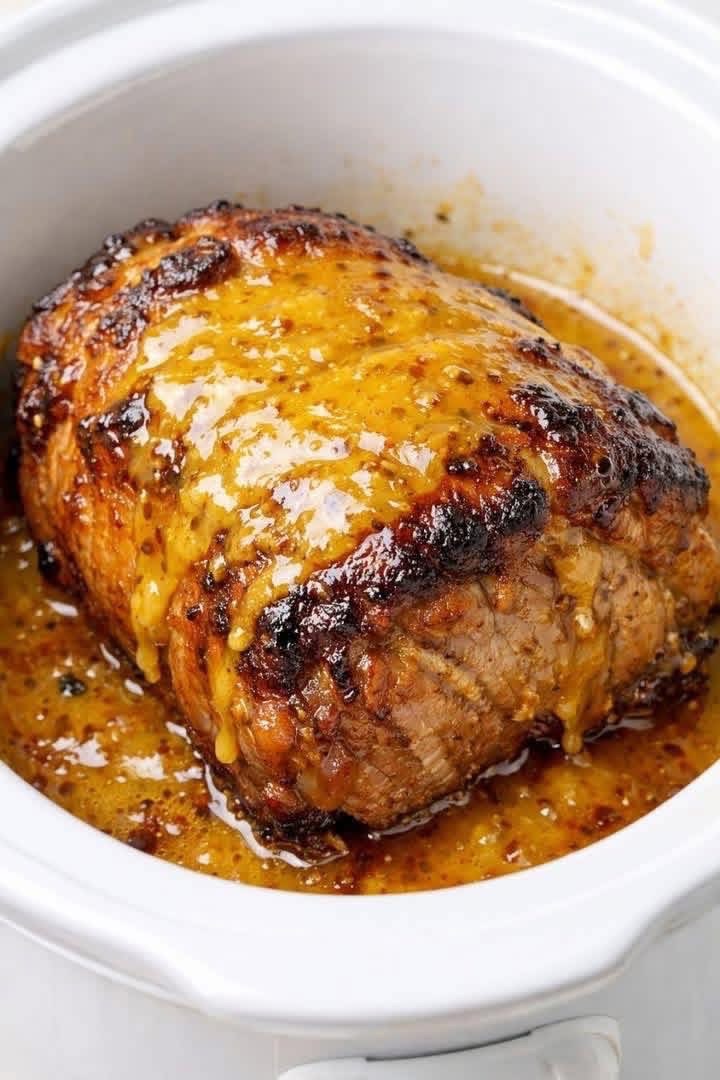
Why Make This Roast? This is the sweet, tangy, fall-apart tender pork roast that will become your new favorite way to cook pork shoulder. The combination of honey and mustard creates a perfectly balanced sauce—sweet without being cloying, tangy without being sharp—that caramelizes beautifully as the pork cooks low and slow. The meat becomes so tender that it practically shreds itself, soaking up all that glorious sauce. Serve it over rice, on sandwiches, or alongside roasted vegetables for a dinner that feels special but requires almost no work.
Ingredients
One pork shoulder or pork butt (three to four pounds), half cup honey, half cup Dijon mustard (or whole grain mustard for texture), one quarter cup low-sodium soy sauce (or tamari for gluten-free), four cloves garlic minced, one teaspoon dried thyme (or one tablespoon fresh), half teaspoon black pepper, and one tablespoon apple cider vinegar (optional, for extra tang). Optional for serving: fresh parsley or chives for garnish, cooked rice, mashed potatoes, or soft rolls.
Equipment Needed
A slow cooker (five to six quarts or larger), a small bowl or measuring cup, a whisk or fork, tongs, a sharp knife, a meat thermometer (optional), a fat separator or large spoon, and two forks for shredding.
Method
Pat the pork roast completely dry with paper towels. If the pork has a thick fat cap, score it with a knife in a crosshatch pattern (about half an inch deep). This helps the fat render and allows the sauce to penetrate.
Optional but recommended: For deeper flavor, heat a tablespoon of oil in a large skillet over medium-high heat. Sear the pork roast on all sides until deeply golden brown, about three to four minutes per side. Transfer the seared pork to the slow cooker.
In a small bowl or measuring cup, whisk together the honey, Dijon mustard, soy sauce, minced garlic, dried thyme, black pepper, and apple cider vinegar if using until smooth.
Pour the honey mustard mixture over the pork roast, turning the meat with tongs to coat all sides. The sauce should pool around the bottom of the slow cooker.
Cover the slow cooker with the lid. Cook on LOW for seven to eight hours or on HIGH for four to five hours. The pork is done when it is fall-apart tender and shreds easily with a fork. An internal temperature should read at least 93°C (200°F) for perfect pulling.
Carefully remove the pork roast from the slow cooker and place it on a cutting board or in a large bowl. Use two forks to shred the meat into large chunks, discarding any large pockets of fat.
While the pork shreds, prepare the sauce. Pour the cooking liquid from the slow cooker into a fat separator or tilt the slow cooker and spoon off the excess fat from the surface. You want to keep the flavorful liquid but remove most of the rendered fat.
Return the shredded pork to the slow cooker and pour the defatted sauce over the top. Stir gently to coat the meat. Let it soak for ten to fifteen minutes on the WARM setting or LOW heat before serving. This step allows the pork to absorb all that sweet, tangy flavor.
Serve hot, spooning extra sauce over each portion. Garnish with fresh parsley or chives if desired.
Storage
Refrigerate in an airtight container for up to five days. The flavor improves overnight. Reheat gently on the stovetop or in the microwave. Freeze for up to three months. Thaw overnight in the refrigerator before reheating.
Variations
For a whole grain version, use whole grain mustard instead of Dijon for texture and a slightly milder heat. For a spicy version, add one tablespoon of prepared horseradish or one teaspoon of red pepper flakes to the sauce. For a maple mustard version, replace the honey with pure maple syrup. For a balsamic version, replace the apple cider vinegar with balsamic vinegar and add one tablespoon of brown sugar. For a garlic lovers version, double the garlic to eight cloves. For a chicken version, substitute bone-in chicken thighs and cook on LOW for four to five hours or on HIGH for two to three hours. For a low-carb version, use a sugar-free honey substitute like stevia-sweetened honey-flavored syrup and low-sodium soy sauce. Serve over cauliflower rice or zucchini noodles.
Serving Suggestions
Serve over white rice or brown rice to soak up the honey mustard sauce. Pair with creamy mashed potatoes or roasted sweet potatoes. Pile onto soft rolls or hamburger buns for pulled pork sandwiches topped with coleslaw. Serve alongside roasted Brussels sprouts, green beans, or a simple green salad. Spoon over baked potatoes or sweet potatoes. Use as a filling for tacos or burrito bowls with avocado and pickled onions.
Tips for Best Results
Use pork shoulder or pork butt, not pork loin. Pork shoulder has the fat and connective tissue needed to become fall-apart tender during long, slow cooking. Pork loin is too lean and will become dry and stringy no matter how long you cook it.
Sear the pork for deeper flavor. The slow cooker alone produces tender pork, but a quick sear in a hot skillet creates a golden brown crust and adds layers of savory flavor through the Maillard reaction. If you are short on time, you can skip it—the pork will still be delicious—but the extra ten minutes is worth it.
Use Dijon mustard, not yellow mustard. Dijon has a sharper, more complex flavor that stands up to the honey and pork. Yellow mustard is too mild and vinegary. Whole grain mustard adds wonderful texture and visual appeal.
Do not skip the soy sauce. The soy sauce adds umami depth and saltiness that balances the sweetness of the honey. It does not make the pork taste like soy—it just makes it taste more savory. Use low-sodium soy sauce to control the salt level.
Do not lift the lid during cooking. Each time you lift the lid, heat escapes and adds fifteen to twenty minutes of cooking time. Trust the process and let the slow cooker do its job.
Skim the fat before adding the shredded pork back in. Pork shoulder releases a significant amount of fat during cooking. Removing most of it keeps the final dish from being greasy. A fat separator is the easiest tool, but you can also tilt the slow cooker and spoon off the top layer of fat.
Let the pork soak in the sauce after shredding. The shredded meat is thirsty. Letting it sit in the defatted sauce for ten to fifteen minutes allows every strand to absorb flavor. This step makes the difference between good pulled pork and great pulled pork.
Make a double batch of sauce. The honey mustard sauce is also fantastic on chicken thighs, meatballs, or roasted vegetables. Double the ingredients and simmer on the stovetop for ten minutes for a versatile sauce you can use all week.
Save the cooking liquid. The liquid left after the pork is gone is liquid gold. Strain it and store it in the refrigerator. The fat will solidify on top, leaving a rich, flavorful sauce underneath. Use it to cook rice, as a glaze for roasted vegetables, or as a dipping sauce for bread.
Make it a day ahead for even better flavor. Like most slow cooker meals, this pork roast is even better the next day after the flavors have melded. Prepare, shred, and let it cool in the sauce overnight in the refrigerator. The next day, skim the solidified fat and reheat gently. Serve with fresh herbs for an almost effortless dinner.