
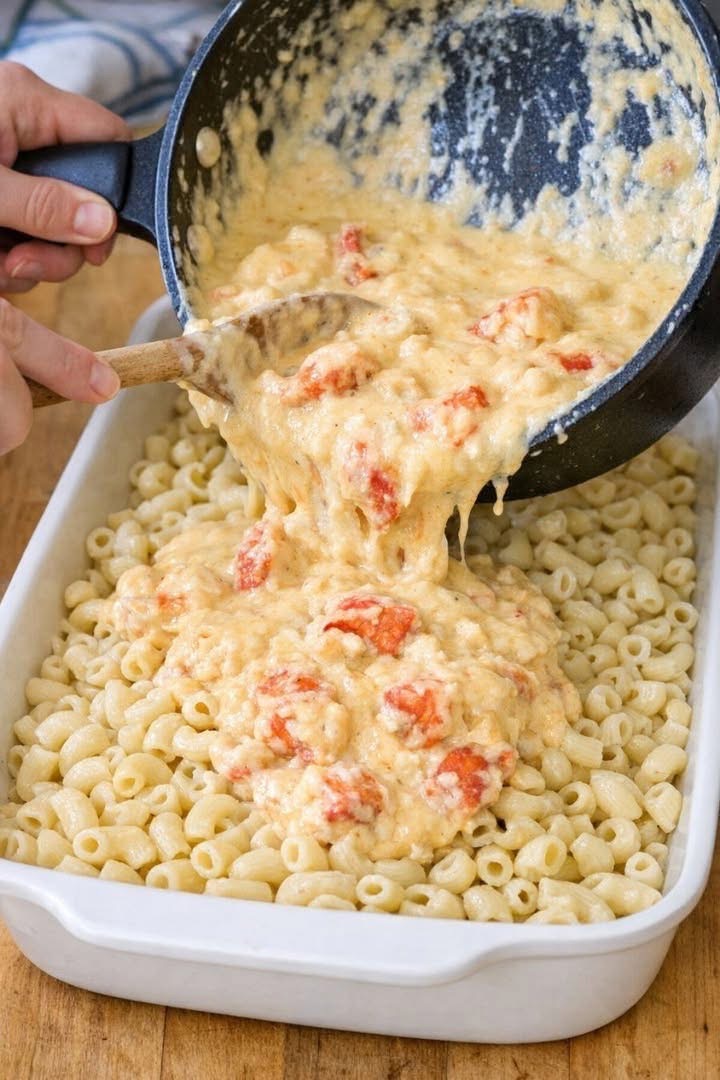
Why Make This Dish? This is the ultimate indulgence. Creamy, buttery lobster folded into velvety cheese sauce with tender pasta, all topped with a golden, crispy crust. It is the dish you bring out for date night at home, Christmas Eve, or any time you want to feel truly spoiled. The sweetness of the lobster pairs beautifully with sharp cheddar and nutty Gruyère, while a sprinkle of paprika and a buttery breadcrumb topping add color and crunch. It is decadent, impressive, and surprisingly straightforward to make.
Ingredients
For the pasta and lobster: one pound elbow macaroni or cavatappi, two eight-ounce lobster tails (about one pound total meat), one tablespoon unsalted butter, one clove garlic minced, one tablespoon olive oil, and salt for the pasta water.
For the cheese sauce: four tablespoons unsalted butter, one quarter cup all-purpose flour, three cups whole milk (warmed), one cup heavy cream (warmed), two cups sharp white cheddar cheese shredded, one cup Gruyère cheese shredded, half cup Parmesan cheese grated, one teaspoon salt, half teaspoon black pepper, half teaspoon smoked paprika, and one quarter teaspoon cayenne pepper (optional).
For the topping: one cup panko breadcrumbs, two tablespoons unsalted butter melted, two tablespoons grated Parmesan cheese, and one tablespoon fresh parsley chopped (optional).
Equipment Needed
A large pot for pasta, a medium saucepan for the cheese sauce, a whisk, a 9×13 inch baking dish (or a 3-quart casserole), a large skillet for the lobster, a cutting board and sharp knife, a fine-mesh strainer or steamer basket, and a spatula or wooden spoon. Optional: kitchen shears for lobster tails.
Method
Preheat your oven to 190°C (375°F). Grease a 9×13 inch baking dish with butter or cooking spray.
Bring a large pot of salted water to a boil. Add the macaroni and cook according to package directions until al dente (about one minute less than the package recommends, since it will bake further). Drain and set aside.
Cook the lobster. Bring a few inches of water to a simmer in a large pot fitted with a steamer basket. Place the lobster tails in the basket, cover, and steam for five to seven minutes until the shells turn bright red and the meat is opaque and firm. Alternatively, bring a large pot of salted water to a boil, add the lobster tails, and boil for four to five minutes. Remove the tails and let them cool slightly before handling.
While the lobster cools, make the cheese sauce. In a medium saucepan, melt four tablespoons of butter over medium heat. Add the flour and whisk constantly for one to two minutes until the mixture is golden and smells nutty (this is a roux).
Slowly whisk in the warm milk and warm cream, a little at a time, to prevent lumps. Continue whisking until the sauce is smooth and begins to thicken, about five to seven minutes. Reduce the heat to low.
Add the shredded cheddar, Gruyère, and Parmesan cheeses to the sauce one handful at a time, stirring until each addition is fully melted before adding the next. Stir in the salt, black pepper, smoked paprika, and cayenne if using. Keep the sauce warm over very low heat, stirring occasionally.
Remove the lobster meat from the shells. Use kitchen shears or a sharp knife to cut down the center of the soft underside of each tail. Crack the shell open and pull the meat out in one piece. Cut the lobster meat into bite-sized chunks (about half-inch pieces).
In a small skillet, melt one tablespoon of butter with the olive oil over medium heat. Add the minced garlic and cook for thirty seconds until fragrant. Add the lobster chunks and cook for one to two minutes, just until heated through. Do not overcook—lobster becomes rubbery when overdone. Remove from heat.
Combine everything. In a large bowl (or directly in the pasta pot), combine the cooked macaroni, lobster chunks, and cheese sauce. Stir gently until the pasta and lobster are evenly coated in sauce.
Transfer the mixture to the prepared baking dish and spread it evenly.
Make the topping. In a small bowl, combine the panko breadcrumbs, melted butter, and grated Parmesan cheese. Stir until the crumbs are evenly moistened. Sprinkle the topping evenly over the mac and cheese.
Bake uncovered for twenty to twenty-five minutes, until the sauce is bubbly around the edges and the topping is golden brown. For an extra-crispy top, switch the oven to broil for the last one to two minutes, watching carefully to prevent burning.
Let the casserole rest for five to ten minutes before serving. Garnish with fresh parsley if desired.
Storage
Refrigerate in an airtight container for up to three days. Reheat individual portions in the microwave or reheat the whole dish covered with foil at 175°C (350°F) for fifteen to twenty minutes. Freezing is not recommended—the creamy sauce separates and the pasta texture changes upon thawing. If you must freeze, freeze before baking and add ten to fifteen minutes to the baking time.
Variations
For a truffle lobster mac, add one teaspoon of truffle oil to the cheese sauce at the end. For a bacon lobster version, cook six slices of bacon until crispy, crumble them, and sprinkle over the top before baking. For a spicy version, add half a teaspoon of cayenne pepper to the cheese sauce and top with sliced jalapeños. For a crab and lobster version, replace half the lobster with lump crab meat. For a four-cheese version, add a quarter cup of Fontina or Gouda to the cheese blend. For a gluten-free version, use gluten-free pasta, gluten-free flour for the roux, and gluten-free panko breadcrumbs. For a single-serving version, divide the mixture into individual ramekins and bake for fifteen minutes.
Serving Suggestions
Serve with a crisp green salad dressed in lemon vinaigrette to cut through the richness. Pair with roasted asparagus or garlic green beans. Serve alongside a glass of Chardonnay or sparkling wine. Garnish with fresh chives or parsley. Serve as a main course for a special occasion dinner or as a side dish for a holiday feast.
Tips for Best Results
Do not overcook the lobster. Lobster cooks very quickly. Steaming for five to seven minutes is usually perfect. The meat should be opaque and firm but still tender. Overcooked lobster becomes tough and rubbery. If you are unsure, err on the side of undercooking—it will warm through again in the oven.
Use fresh lobster if possible. Frozen lobster tails work well and are widely available, but fresh lobster has superior sweetness and texture. If using frozen, thaw them completely in the refrigerator overnight before cooking.
Shred your own cheese. Pre-shredded cheese contains anti-caking agents like cellulose and potato starch that prevent smooth melting. Freshly shredded cheese melts into a silky, cohesive sauce without graininess. Shredding takes two minutes and makes a noticeable difference.
Warm the milk and cream before adding to the roux. Cold liquid seizes the roux and creates lumps. Warm milk and cream whisk in smoothly, creating a velvety sauce. Heat them in a separate saucepan or microwave until steaming but not boiling.
Do not boil the cheese sauce. High heat can cause the cheese sauce to separate into a greasy, grainy mess. Keep the heat low or medium-low after adding the cheese. Stir gently until the cheese melts, then remove from heat.
Cook the pasta al dente, even slightly underdone. The pasta will continue to absorb liquid and cook further in the oven. Overcooked pasta becomes mushy and loses its structure. Aim for one minute less than the package directions.
Use cavatappi or shells instead of elbow macaroni. Cavatappi (corkscrew-shaped pasta) holds more cheese sauce in its ridges. Shells are also excellent for trapping sauce and small pieces of lobster. Elbow macaroni works but is less interesting.
Make the breadcrumb topping fresh. Panko breadcrumbs mixed with melted butter and Parmesan create a light, crispy, golden crust. Pre-made breadcrumb blends or regular dried breadcrumbs do not crisp up as well.
Let the casserole rest before serving. Five to ten minutes off the heat allows the cheese sauce to set slightly, making it easier to serve clean portions. Cutting into it immediately releases all that molten sauce onto the plate.
Save the lobster shells for stock. Do not throw away those shells. They are packed with flavor. Freeze them in a zip-top bag until you have enough to make a small batch of lobster stock for soups, risottos, or sauces.