
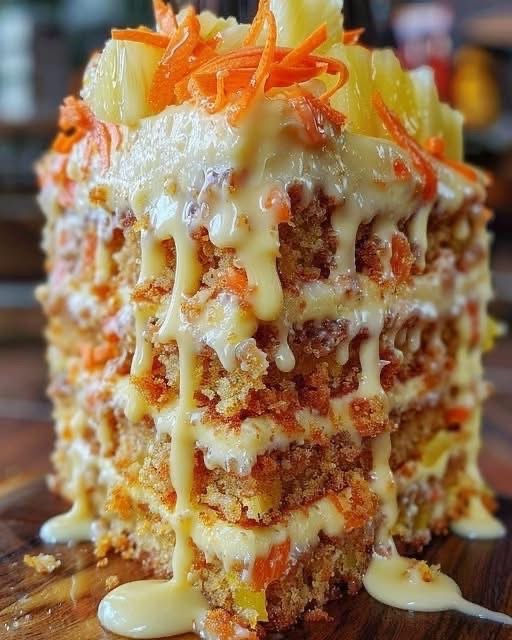
Why Make This Cake? This is a tropical twist on a classic favorite. Traditional carrot cake gets a Hawaiian upgrade with crushed pineapple and toasted coconut, making it one of the moistest, most flavorful cakes you will ever bake. The pineapple adds natural sweetness and incredible tenderness, while the coconut brings a chewy, nutty contrast. Topped with a creamy pineapple cream cheese frosting, this cake tastes like sunshine on a plate. It is perfect for Easter, birthdays, potlucks, or any time you want to transport your taste buds to the islands.
Ingredients
For the cake: two cups all-purpose flour, two teaspoons baking soda, one teaspoon baking powder, one teaspoon ground cinnamon, half teaspoon ground nutmeg, half teaspoon salt, three large eggs at room temperature, one and a half cups granulated sugar, one cup vegetable oil (or melted coconut oil for more coconut flavor), two teaspoons vanilla extract, two cups finely grated carrots (about three to four medium carrots), one can (8 ounces) crushed pineapple (do not drain), and one cup sweetened shredded coconut.
For the pineapple cream cheese frosting: eight ounces cream cheese softened to room temperature, half cup unsalted butter softened, four cups powdered sugar sifted, one quarter cup crushed pineapple (well drained, juice pressed out), and one teaspoon vanilla extract.
For garnish (optional): additional shredded coconut (toasted), chopped macadamia nuts or walnuts, and pineapple tidbits or carrot curls.
Equipment Needed
Two 9-inch round cake pans (or a 9×13 inch sheet pan), parchment paper, electric mixer (stand or hand), large mixing bowls, a whisk, a rubber spatula, a grater or food processor for carrots, a fine-mesh strainer or cheesecloth for draining pineapple, and wire cooling racks.
Method
Preheat your oven to 175°C (350°F). Grease two 9-inch round cake pans thoroughly. Line the bottoms with parchment paper and grease the paper as well. Dust with flour and tap out the excess.
In a large bowl, whisk together the flour, baking soda, baking powder, cinnamon, nutmeg, and salt. Set aside.
In another large bowl, beat the eggs, sugar, oil, and vanilla extract together until well combined and slightly lighter in color, about two minutes.
Add the dry ingredients to the wet ingredients. Mix on low speed until just combined. Do not overmix.
Stir in the grated carrots, undrained crushed pineapple (with all its juice), and shredded coconut by hand using a rubber spatula. The batter will be thick and very moist—this is correct.
Divide the batter evenly between the prepared cake pans. Smooth the tops with a spatula.
Bake for thirty to thirty five minutes, until a toothpick inserted in the center comes out clean or with just a few moist crumbs. The tops should be golden brown and spring back when lightly touched.
Let the cakes cool in the pans for ten minutes. Then carefully invert them onto wire cooling racks, remove the parchment paper, and allow them to cool completely. Do not attempt to frost warm cake—the frosting will melt.
While the cakes cool, make the frosting. In a large bowl, beat the softened cream cheese and butter together until smooth and creamy, about two to three minutes. Scrape down the sides and bottom of the bowl.
Gradually add the sifted powdered sugar, one cup at a time, beating on low speed until incorporated. Beat on medium speed until light and fluffy.
Press the crushed pineapple through a fine-mesh strainer or squeeze it in a clean kitchen towel to remove as much juice as possible. You want very dry pineapple pulp. Stir the drained pineapple and vanilla extract into the frosting. If the frosting becomes too thin, add a little more powdered sugar.
Place one cooled cake layer on a serving plate. Spread a generous layer of frosting evenly over the top. Place the second cake layer on top. Frost the top and sides of the entire cake.
If desired, press toasted coconut or chopped macadamia nuts onto the sides of the frosted cake. Garnish the top with additional toasted coconut and pineapple tidbits.
Refrigerate the cake for at least thirty minutes before serving. This helps the frosting set and makes slicing much easier.
Storage
Refrigerate in an airtight container for up to five days. This cake is very moist and actually tastes even better on day two and three as the flavors meld. Bring slices to room temperature for about fifteen minutes before serving if you prefer a softer texture. This cake can be frozen for up to three months. Wrap individual slices or the whole unfrosted cake tightly in plastic wrap and then in foil. Thaw overnight in the refrigerator before frosting and serving.
Variations
For a carrot pineapple cake with nuts, add one cup of chopped walnuts or pecans to the batter along with the carrots and pineapple. For a coconut lover’s version, use coconut oil instead of vegetable oil, add one teaspoon of coconut extract, and double the shredded coconut in the batter. Toast extra coconut for garnish. For a gluten-free version, use a cup-for-cup gluten-free flour blend. Add one quarter teaspoon of xanthan gum if your blend does not already include it. For a vegan version, use flax eggs (three tablespoons ground flaxseed mixed with nine tablespoons water, let sit for five minutes), vegan cream cheese, vegan butter, and plant-based milk or oil. For a pineapple upside down version, pour the batter over a layer of pineapple rings and maraschino cherries in a greased 9×13 pan. Bake as directed, then invert onto a platter. For a carrot pineapple loaf, bake the batter in two greased 9×5 inch loaf pans for fifty to sixty minutes. Frost or serve with a drizzle of cream cheese glaze. For a cupcake version, line muffin tins with paper liners and fill two thirds full. Bake at 175°C (350°F) for eighteen to twenty two minutes. Makes about twenty four cupcakes.
Serving Suggestions
Serve as a birthday cake, Easter dessert, or summer potluck showstopper. Pair with a cup of coffee, hot tea, or a cold glass of milk. Garnish each slice with a dollop of whipped cream and a sprinkle of toasted coconut. Serve with a scoop of vanilla bean or coconut ice cream.
Tips for Best Results
Do not drain the crushed pineapple. The juice in the can is essential for moisture and tenderness. Add the entire can—pineapple and juice—directly to the batter. Draining it will result in a drier, less flavorful cake.
Use finely grated carrots. Coarse, chunky shreds create pockets of raw carrot that do not fully cook. Use the small holes on a box grater or a food processor with the fine grating disk. The carrots should almost resemble a paste.
Shred your own carrots. Pre-shredded bagged carrots are too dry and coarse. Fresh carrots release moisture as they bake, keeping the cake tender. One medium carrot yields about two thirds of a cup shredded.
Do not overmix the batter after adding the flour. Overmixing develops gluten and makes the cake tough instead of tender. Stir just until the flour disappears into the wet ingredients.
Let the cake cool completely before frosting. Warm cake will melt the cream cheese frosting into a thin, runny mess. Cool the layers on wire racks for at least one hour. For the best results, refrigerate the cooled layers for twenty minutes before frosting.
Drain the pineapple for the frosting very well. Excess juice in the frosting will make it too thin to spread and can cause the frosting to separate. Press the crushed pineapple in a fine-mesh strainer or squeeze it in a clean kitchen towel until almost dry.
Use full-fat cream cheese and butter for the frosting. Low-fat cream cheese contains more water and results in a thinner, less stable frosting that may not hold its shape on the cake.
Toast the coconut for garnish. Spread shredded coconut on a baking sheet and toast at 175°C (350°F) for five to seven minutes, stirring halfway, until golden brown. Toasted coconut adds deep, nutty flavor and a pretty golden edge.
Level the cake layers if needed. Carrot pineapple cake tends to dome in the center. Use a serrated knife to gently level the tops so your stacked cake sits flat and even.
Make it a day ahead. This cake is incredibly moist and the flavors blend beautifully overnight. Bake and frost the cake the day before you plan to serve it. Store covered in the refrigerator, then bring to room temperature for about thirty minutes before serving.