
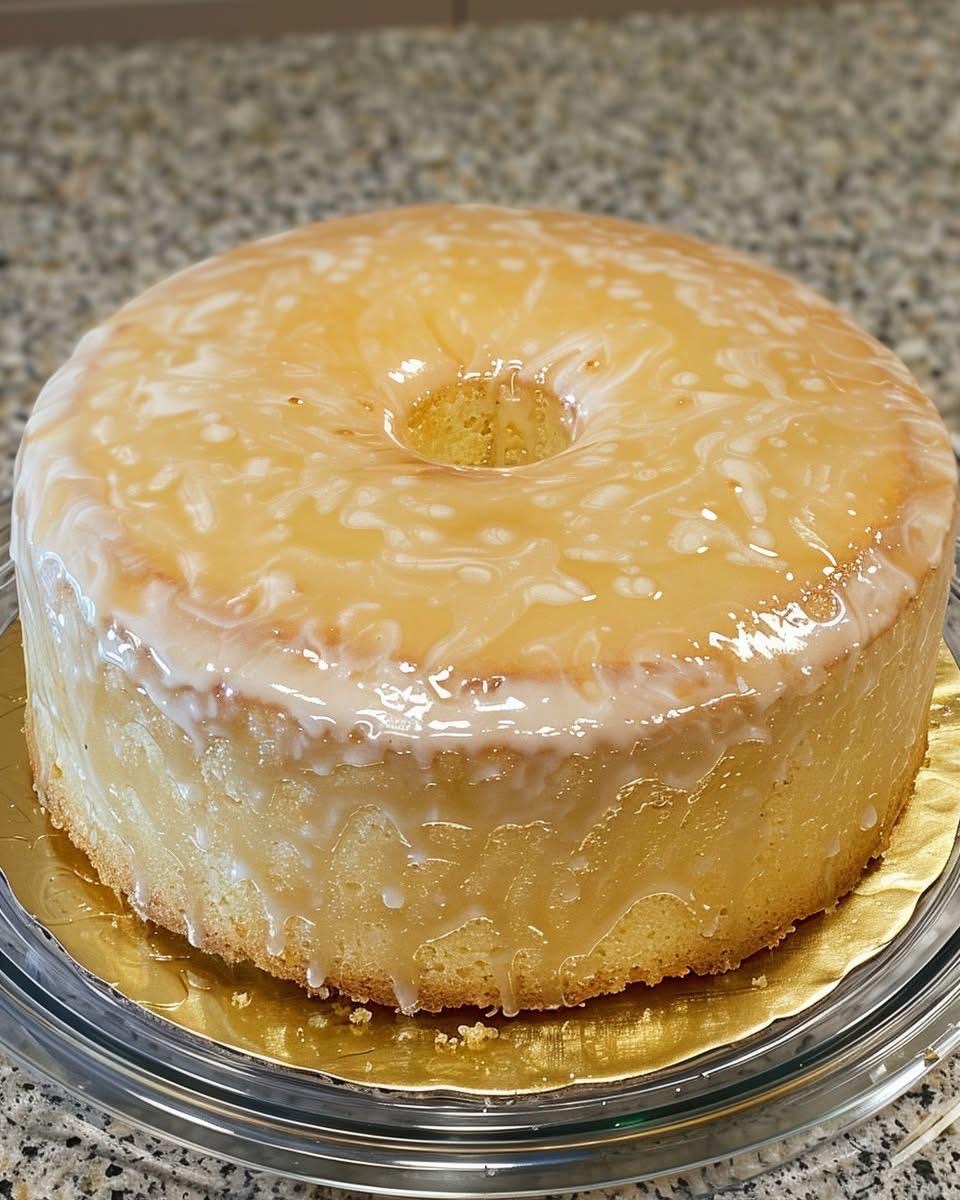
Why Make This Cake?
-
Bright, tangy lemon flavor in every bite.
-
Moist, tender crumb with a beautiful golden crust.
-
Simple glaze adds sweetness and shine.
-
Perfect for brunch, dessert, or tea time.
Ingredients
For the cake:
-
3 cups all-purpose flour
-
1 teaspoon baking powder
-
½ teaspoon baking soda
-
½ teaspoon salt
-
1 cup unsalted butter (softened to room temperature)
-
2 cups granulated sugar
-
4 large eggs (room temperature)
-
¼ cup fresh lemon juice (about 2–3 lemons)
-
2 tablespoons lemon zest (about 3–4 lemons)
-
1 teaspoon vanilla extract
-
1 cup buttermilk (room temperature)
For the lemon glaze:
-
2 cups powdered sugar (sifted)
-
3–4 tablespoons fresh lemon juice
-
1 tablespoon lemon zest (optional, for extra punch)
Equipment Needed
-
10 to 12-cup Bundt pan
-
Electric mixer (stand or hand)
-
Large mixing bowls
-
Whisk
-
Rubber spatula
-
Cooling rack
-
Small bowl for glaze
Method
1. Prepare the pan and oven
-
Preheat your oven to 175°C (350°F).
-
Generously grease the Bundt pan with butter or non-stick spray. Make sure to get into all the crevices.
-
Lightly dust with flour, then tap out the excess. Alternatively, use a baking spray that contains flour.
2. Mix the dry ingredients
-
In a medium bowl, whisk together the flour, baking powder, baking soda, and salt. Set aside.
3. Cream the butter and sugar
-
In a large bowl with an electric mixer, beat the softened butter and granulated sugar together on medium speed for 3–5 minutes, until light and fluffy.
-
Scrape down the sides and bottom of the bowl as needed.
4. Add the eggs, lemon, and vanilla
-
Add the eggs one at a time, beating well after each addition.
-
Beat in the lemon juice, lemon zest, and vanilla extract. The mixture may look slightly curdled – that is fine.
5. Alternate dry ingredients and buttermilk
-
Reduce mixer speed to low.
-
Add the dry ingredients in three additions, alternating with the buttermilk in two additions. Start and end with the dry ingredients.
-
Mix just until combined. Do not overmix.
6. Bake the cake
-
Pour the batter into the prepared Bundt pan and smooth the top with a spatula.
-
Tap the pan gently on the counter to release air bubbles.
-
Bake for 45–55 minutes, or until a toothpick inserted into the center comes out clean or with a few moist crumbs.
-
The top should be golden brown and spring back when lightly touched.
7. Cool the cake
-
Let the cake cool in the pan on a wire rack for exactly 15 minutes.
-
After 15 minutes, invert the pan onto the wire rack and lift off the pan. If the cake sticks, tap the pan gently.
-
Let the cake cool completely (about 1–2 hours) before glazing.
8. Make the glaze
-
In a small bowl, whisk together the powdered sugar and 3 tablespoons of lemon juice until smooth.
-
Add more lemon juice ½ teaspoon at a time until the glaze is thick but pourable – it should slowly drizzle off the whisk.
-
Stir in the lemon zest if using.
9. Glaze the cake
-
Place the cooled Bundt cake on a serving plate or the wire rack over a baking sheet (to catch drips).
-
Drizzle or spoon the glaze evenly over the top, letting it run down the sides.
-
Allow the glaze to set for 15–20 minutes before serving.
Storage
-
Room temperature – cover loosely and store for up to 3 days.
-
Refrigerator – store in an airtight container for up to 1 week. Bring to room temperature before serving.
-
Freezer – wrap tightly in plastic wrap and foil. Freeze unglazed cake for up to 3 months. Thaw overnight in the refrigerator, then glaze.
Variations
-
Blueberry lemon – fold 1½ cups fresh or frozen (unthawed) blueberries into the batter.
-
Poppy seed – add 2 tablespoons poppy seeds with the dry ingredients.
-
Lavender lemon – add 1 tablespoon dried culinary lavender to the buttermilk and let steep for 10 minutes, then strain.
-
Coconut lemon – replace ½ cup of flour with ½ cup shredded unsweetened coconut.
-
Extra tangy – add 1 tablespoon of lemon extract along with the vanilla.
Tips for Best Results
-
Use room temperature ingredients – butter, eggs, and buttermilk blend more smoothly and create a better crumb.
-
Do not overmix the batter – mix just until the flour disappears to keep the cake tender.
-
Grease the Bundt pan very thoroughly – every nook and cranny. This is the most important step for a clean release.
-
Cool for exactly 15 minutes – too short, and the cake may break; too long, and it may stick.
-
Let the cake cool completely before glazing – a warm cake will absorb the glaze instead of letting it set on top.
-
For a thicker glaze, use less lemon juice. For a thinner, more translucent glaze, use more.
-
Double the glaze if you want a heavy coating or drip effect.