
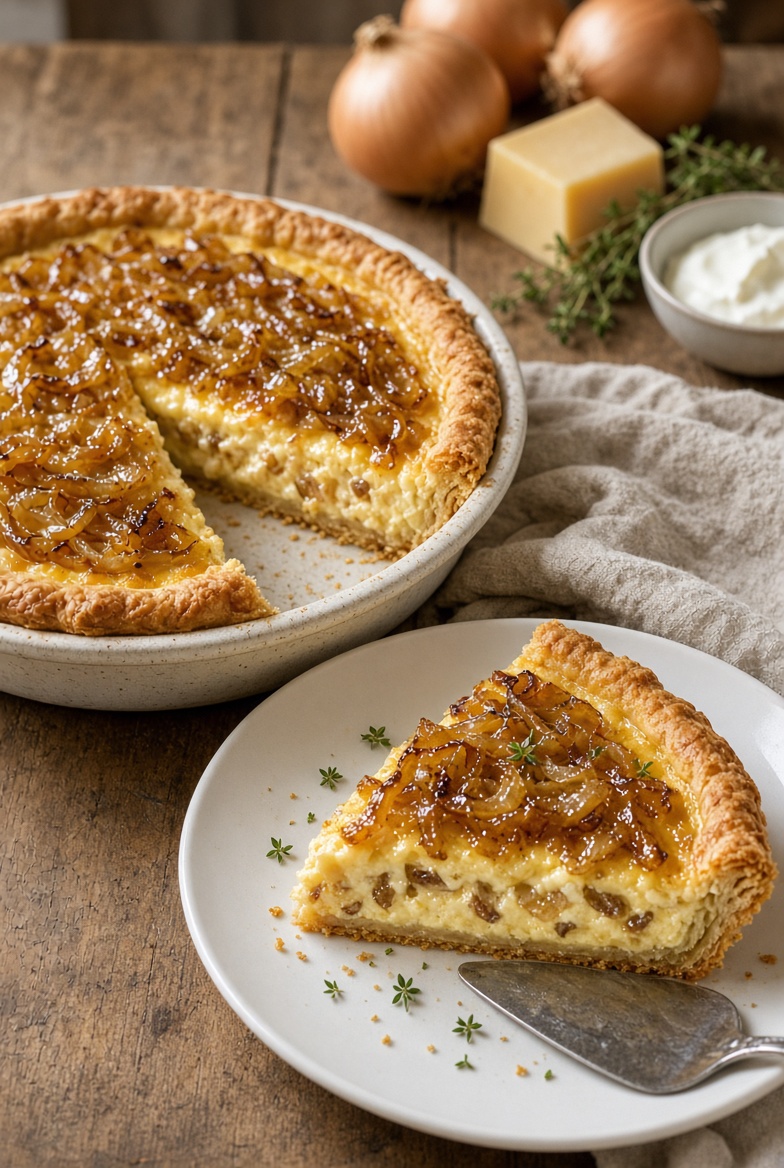
Why You’ll Love This German Onion Pie
The star of this recipe is the onion. Slowly cooking the onions before baking softens their sharp flavor and brings out their natural sweetness.
The eggs and sour cream create a tender, creamy filling, while Gruyère or Emmental contributes a savory, nutty cheese flavor. Fresh thyme adds a simple herbal finish.
It’s also an excellent make-ahead dish because the pie slices more cleanly after it has had a little time to rest.
Ingredients
For the Pie
- 1 unbaked 9-inch pie crust
- 3 large yellow onions, thinly sliced
- 2 tablespoons olive oil
- 1 tablespoon butter
- 2 garlic cloves, minced
- 3 large eggs
- 1 cup sour cream
- 1 cup shredded Emmental or Gruyère cheese
- 1 tablespoon all-purpose flour
- ½ teaspoon salt
- ½ teaspoon freshly ground black pepper
- ¼ teaspoon ground nutmeg
- ½ teaspoon dried thyme
- 1 teaspoon fresh thyme leaves, plus more for garnish
How to Make German Onion Pie
1. Prepare the Oven
Preheat the oven to 375°F (190°C).
Fit the pie crust into a 9-inch pie dish and gently press it against the bottom and sides.
Refrigerate the prepared crust while you make the filling.
2. Cook the Onions
Heat the olive oil and butter in a large skillet over medium-low heat.
Add the sliced onions and cook for approximately 15–20 minutes, stirring regularly.
The onions should become very soft and golden. Don’t rush this step—the slowly cooked onions provide much of the flavor.
Add the garlic during the final minute.
Remove the skillet from the heat and let the onion mixture cool for several minutes.
3. Prepare the Creamy Filling
In a large bowl, whisk together the eggs and sour cream.
Add the flour, salt, black pepper, nutmeg, and dried thyme.
Whisk until smooth.
Stir in approximately ¾ cup of the shredded cheese, reserving the remainder for the top.
4. Assemble the Pie
Spread the cooked onions evenly over the bottom of the prepared crust.
Slowly pour the egg and sour cream mixture over the onions.
Use a fork to gently distribute the filling if necessary.
Sprinkle the remaining cheese over the top.
Finish with a few fresh thyme leaves.
5. Bake
Bake for approximately 35–40 minutes, until the filling is set and the surface is golden.
A slight movement in the very center is fine when the pie first comes out of the oven; it will continue setting as it rests.
A 35–40 minute bake is also typical of several traditional Zwiebelkuchen preparations.
6. Rest Before Slicing
Allow the German onion pie to rest for 10–15 minutes before cutting.
Serve warm or at room temperature.
Tips for the Best Onion Pie
Slice the onions evenly. Similar-sized slices cook at approximately the same rate.
Cook the onions slowly. High heat can burn the edges before the onions become tender.
Let the onions cool slightly. Adding extremely hot onions directly to the egg mixture can begin cooking the eggs prematurely.
Use freshly grated cheese. It melts more smoothly into the custard.
Don’t slice immediately. Resting helps the creamy filling firm up and gives you cleaner slices.
Traditional Zwiebelkuchen vs. This Version
There isn’t just one style of Zwiebelkuchen. German versions can be made with yeast dough or a pastry-style crust, while eggs and sour cream or cream commonly form the filling with onions. Bacon and caraway frequently appear as well.
This recipe takes inspiration from that tradition but uses a simple pie crust, garlic, thyme, and Emmental or Gruyère for an approachable meatless version.
Easy Variations
German Onion Pie with Bacon
Cook 4–6 slices of chopped bacon until crisp.
Drain most of the fat and add the cooked bacon to the onions before assembling the pie. Bacon is a common ingredient in traditional Zwiebelkuchen.
Traditional Caraway Flavor
Add ½ teaspoon caraway seeds to the filling for a more traditional flavor.
Extra Cheesy Onion Pie
Increase the cheese to 1½ cups and sprinkle the extra cheese over the surface before baking.
Mushroom and Onion Pie
Sauté about 8 ounces of sliced mushrooms until their moisture has evaporated, then combine them with the onions.
What to Serve With German Onion Pie
Because this savory pie is already rich and creamy, simple side dishes work particularly well.
Try it with a crisp green salad, cucumber salad, roasted vegetables, green beans, tomato salad, or a warm bowl of vegetable soup.
For an autumn dinner, serve a warm slice alongside a fresh seasonal salad.
How to Store Leftovers
Allow the pie to cool completely.
Cover it tightly or transfer individual slices to an airtight container and refrigerate for up to 3–4 days.
How to Reheat German Onion Pie
For the best crust, reheat slices in a 325°F (165°C) oven until warmed through.
You can also use an air fryer at a moderate temperature.
Microwaving works for convenience, although it tends to soften the pastry.
Frequently Asked Questions
What Is Zwiebelkuchen?
Zwiebelkuchen literally refers to an onion cake/pie. It’s a savory dish associated particularly with German wine-growing regions and is traditionally enjoyed in the fall.
Do I Need to Caramelize the Onions Completely?
No. They should be very soft and lightly golden, but they don’t need the deep brown color of fully caramelized onions.
Can I Use Gruyère Instead of Emmental?
Yes. Either cheese works nicely in this version. Gruyère provides a slightly stronger flavor, while Emmental is milder.
Can I Add Bacon?
Absolutely. Bacon is actually common in traditional German onion pie recipes.
Can I Make German Onion Pie Ahead?
Yes. Bake the pie, let it cool, refrigerate it, and gently reheat it before serving.
How Do I Know When the Pie Is Done?
The edges should be golden and the custard should appear set. The center shouldn’t look liquid when the pie is gently moved.