
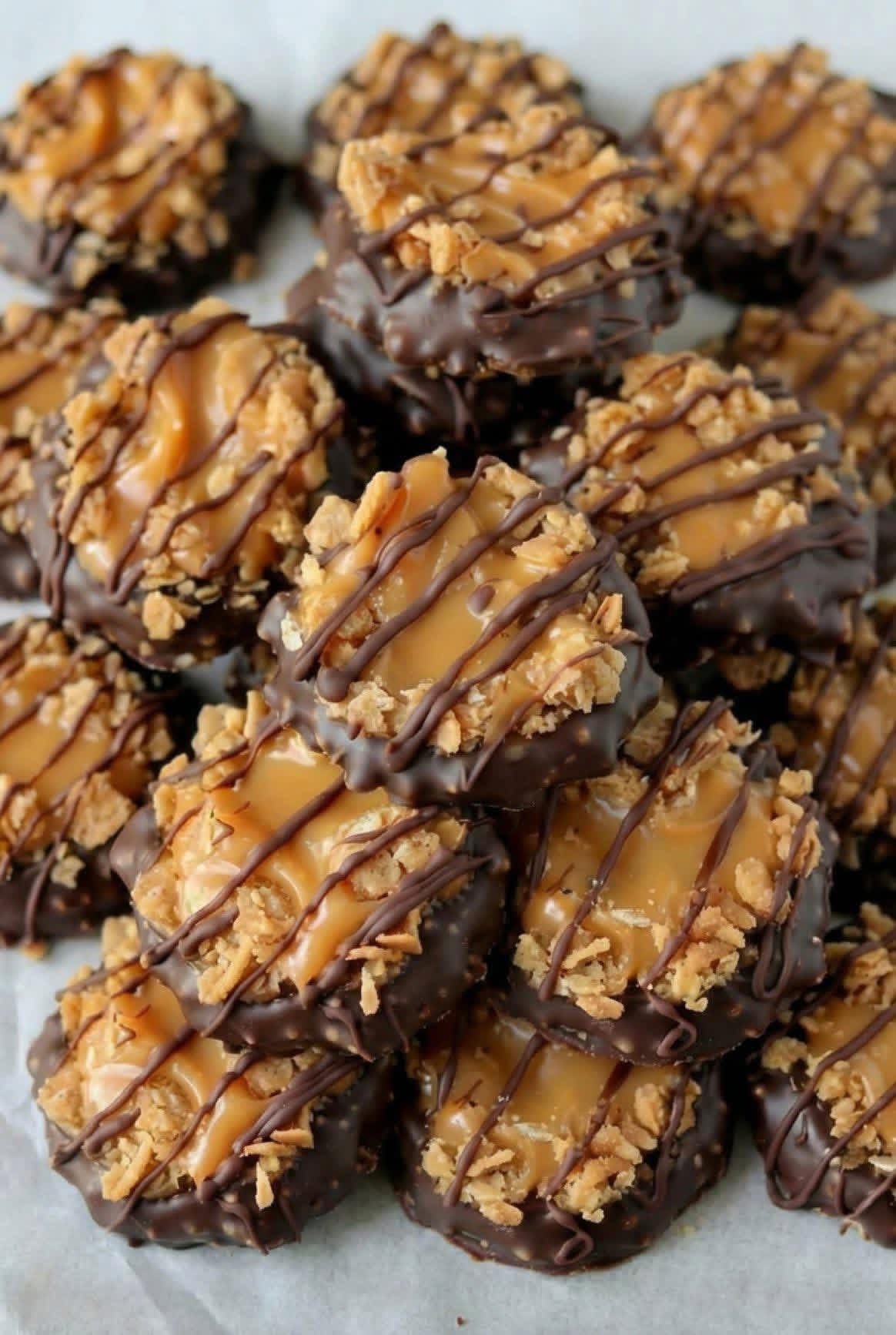
Ingredients
For the base:
-
Two cups vanilla wafer crumbs (or shortbread cookie crumbs)
-
Half cup unsalted butter, melted
-
Quarter cup granulated sugar
For the caramel coconut layer:
-
Two cups sweetened shredded coconut
-
One bag (11 oz / 310 g) soft caramels, unwrapped
-
Three tablespoons milk or heavy cream
For the chocolate coating:
-
Two cups semi-sweet chocolate chips
-
One tablespoon coconut oil or vegetable oil (optional, for thinning)
For the drizzle (optional):
-
Half cup white chocolate chips or additional semi-sweet chocolate
Equipment Needed
-
Food processor or rolling pin and zip-top bag
-
Large mixing bowl
-
Small saucepan
-
8×8 inch (20×20 cm) baking pan
-
Parchment paper
-
Fork or dipping tool
-
Baking sheet
-
Small zip-top bag for drizzling (optional)
Method
Line an 8×8 inch baking pan with parchment paper, leaving some overhang on two sides for easy removal.
Make the crust. In a food processor or a sealed zip-top bag with a rolling pin, crush the vanilla wafers into fine crumbs. In a mixing bowl, combine the crumbs, melted butter, and granulated sugar. Stir until the mixture resembles wet sand.
Press the crumb mixture firmly and evenly into the bottom of the prepared pan. Use the bottom of a glass or a measuring cup to press down very firmly. Place the pan in the refrigerator to set while you make the topping.
Toast the coconut. Spread the sweetened shredded coconut on a baking sheet. If you have an oven, toast at 175°C (350°F) for five to seven minutes, stirring halfway, until golden brown. If you don’t have an oven, toast in a dry skillet over medium-low heat, stirring constantly, for three to five minutes until golden. Set aside.
Make the caramel mixture. In a small saucepan over low heat, combine the unwrapped soft caramels and milk. Stir frequently until the caramels are completely melted and the mixture is smooth. This takes about five to seven minutes.
Add the toasted coconut to the melted caramel. Stir until all the coconut is evenly coated in the caramel.
Remove the crust from the refrigerator. Spread the caramel coconut mixture evenly over the crust, pressing down gently with a spatula. Return the pan to the refrigerator and chill for at least thirty minutes until firm.
Once the bars are firm, lift them out of the pan using the parchment overhang. Cut into small bars, triangles, or circles using a sharp knife. Traditional Samoa cookies are round, but bars or triangles work perfectly for no-bake versions.
Melt the chocolate. Place the semi-sweet chocolate chips and coconut oil (if using) in a microwave-safe bowl. Microwave in thirty-second bursts, stirring after each, until smooth and glossy.
Dip each cookie. Using a fork or dipping tool, dip the bottom of each cookie into the melted chocolate, then place it on a parchment-lined baking sheet. For the top, either drizzle chocolate back and forth over the cookie or dip the top partially. Traditional Samoas have a chocolate base with drizzles on top.
If making white chocolate drizzle, melt the white chocolate chips in a separate bowl using the same method. Drizzle over the cookies using a fork or a small zip-top bag with the tip snipped off.
Let the cookies set. Place the baking sheet in the refrigerator for fifteen to twenty minutes until the chocolate is completely firm.
Store in an airtight container in the refrigerator.
Storage
Store in an airtight container in the refrigerator for up to two weeks. These cookies can also be frozen for up to three months. Layer them between sheets of parchment paper in a freezer-safe container. Thaw in the refrigerator before serving.
Variations
For a gluten-free version, use gluten-free vanilla wafer crumbs. For a dairy-free version, use dairy-free butter, dairy-free caramels (or make your own with coconut milk and sugar), and dairy-free chocolate chips. For a less sweet version, use dark chocolate chips and unsweetened shredded coconut (toast it longer for extra flavor). For a salted caramel version, sprinkle a pinch of flaky sea salt over the caramel coconut layer before chilling. For a peanut butter Samoa version, add two tablespoons of creamy peanut butter to the caramel mixture.
Serving Suggestions
-
With a glass of cold milk
-
As part of a holiday cookie platter
-
Alongside coffee or hot chocolate
-
Wrapped in cellophane bags as homemade gifts
Tips for Best Results
Press the crust very firmly. A loose crust will crumble when you cut the cookies. Use the bottom of a measuring cup to press down with as much pressure as you can.
Use soft caramels, not hard candies. Kraft or Werther’s soft caramels work best. Hard caramels will not melt smoothly even with added milk.
Toast the coconut well. Toasting brings out deep, nutty flavor. Watch carefully—coconut goes from golden to burnt very quickly.
Let the caramel mixture cool slightly before spreading. If the caramel is too hot, it will seep into the crust and make it soggy. Cool for two to three minutes until still spreadable but not runny.
Chill completely before cutting. Warm caramel coconut layers are sticky and messy. Thirty minutes in the refrigerator is the minimum. An hour is even better.
Use a warm knife for clean cuts. Dip your knife in hot water, wipe it dry, then cut. Repeat between each cut for neat, bakery-style edges.
Dip the bottom first, then drizzle the top. Traditional Samoas have a chocolate-coated bottom with chocolate drizzles on top. This method uses less chocolate and looks authentic.
Do not skip the coconut oil in the chocolate. A small amount thins the chocolate slightly, making dipping and drizzling much easier. If you skip it, the chocolate may be too thick.
Keep leftovers refrigerated. The caramel softens at room temperature. These cookies are best served cold or cool.