
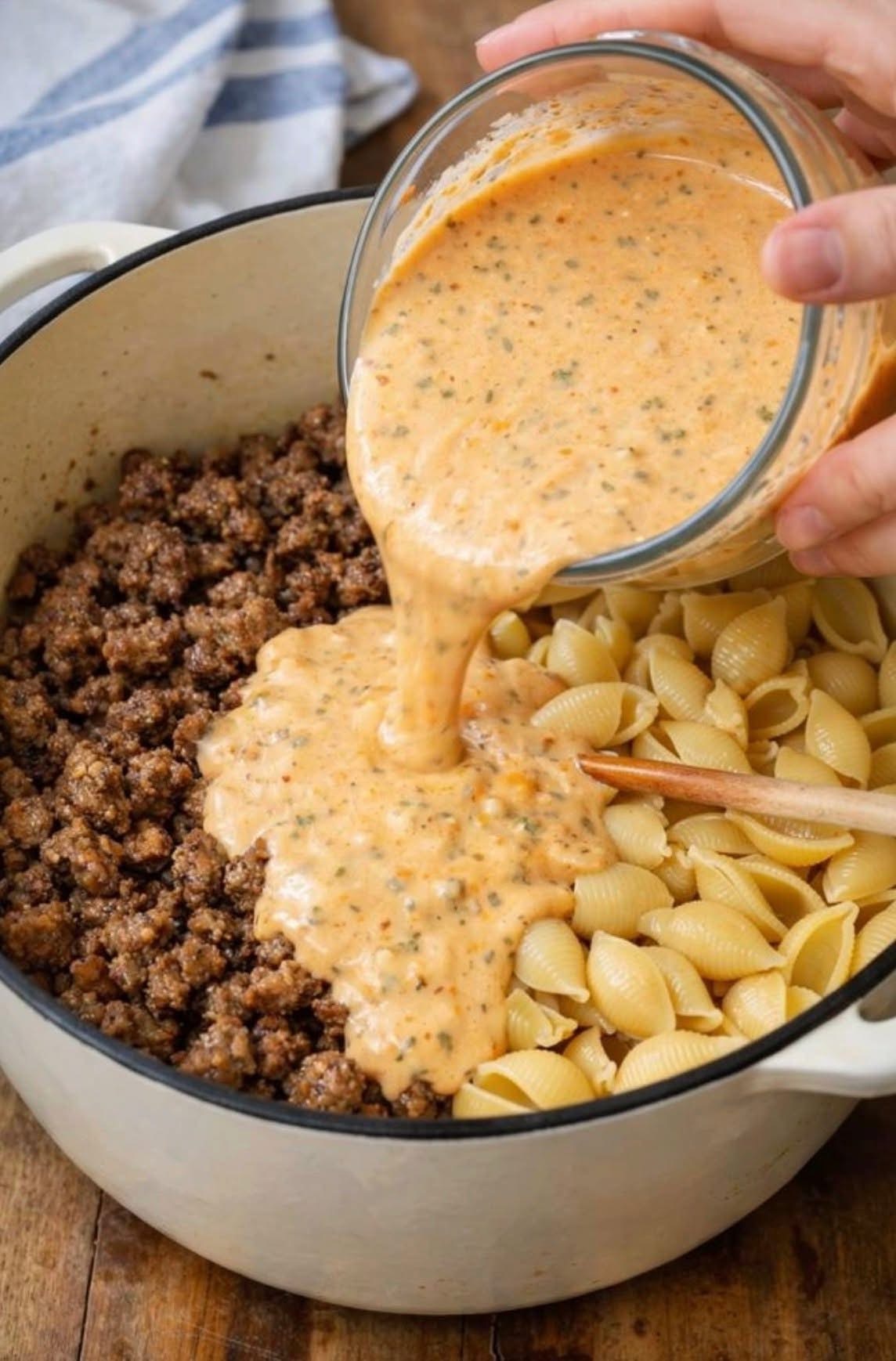
Why Make This Dish?
-
Rich, creamy, smoky flavor
-
Tender steak and pasta in one pan
-
Ready in under 45 minutes
-
Feels fancy but uses simple ingredients
Ingredients
For the steak:
-
One pound (450 g) sirloin steak or flank steak, thinly sliced against the grain
-
One teaspoon smoked paprika
-
Half teaspoon salt
-
Half teaspoon black pepper
-
One tablespoon olive oil
For the creamy paprika sauce:
-
Two tablespoons unsalted butter
-
One medium onion, finely chopped
-
Four cloves garlic, minced
-
Two tablespoons all-purpose flour
-
Two cups beef broth
-
One cup heavy cream
-
Two tablespoons smoked paprika
-
Half teaspoon crushed red pepper flakes (optional, for heat)
-
Half cup grated Parmesan cheese
For the pasta:
-
Twelve ounces (340 g) medium pasta shells (conchiglie)
-
Fresh parsley, chopped (for garnish)
Equipment Needed
-
Large pot for pasta
-
Large skillet or Dutch oven
-
Tongs
-
Whisk
-
Measuring cups and spoons
Method
Bring a large pot of salted water to a boil. Cook the pasta shells according to package directions until al dente. Drain and set aside.
While the pasta cooks, prepare the steak. Pat the sliced steak dry with paper towels. In a small bowl, mix the smoked paprika, salt, and pepper. Sprinkle the seasoning over the steak slices and toss to coat evenly.
Heat the olive oil in a large skillet or Dutch oven over medium-high heat. Add the steak in a single layer. Do not overcrowd—cook in two batches if needed. Sear for one to two minutes per side until browned. The steak does not need to be cooked through at this point. Remove the steak from the skillet and set aside.
Reduce the heat to medium. In the same skillet, melt the butter. Add the chopped onion and cook for three to four minutes until softened. Add the minced garlic and cook for one minute until fragrant.
Sprinkle the flour over the onions and garlic. Stir constantly and cook for one to two minutes to remove the raw flour taste.
Slowly whisk in the beef broth, a little at a time, to prevent lumps. Once the broth is fully incorporated, whisk in the heavy cream, smoked paprika, and red pepper flakes if using. Continue to whisk until the sauce is smooth.
Bring the sauce to a gentle simmer and cook for three to five minutes, stirring occasionally, until it thickens slightly. Stir in the grated Parmesan cheese until melted and smooth. Taste and adjust salt and pepper as needed.
Return the seared steak to the skillet, along with any juices from the plate. Stir to coat the steak in the sauce. Simmer for two to three minutes until the steak is cooked through and tender.
Add the cooked pasta shells to the skillet. Stir gently until everything is well combined and the pasta is coated in the creamy sauce.
Garnish with fresh chopped parsley. Serve immediately.
Storage
Refrigerate in an airtight container for up to four days. Reheat gently on the stovetop over low heat, adding a splash of beef broth or milk to loosen the sauce. Freezing is not recommended—the creamy sauce may separate and the pasta texture will change.
Variations
For extra mushrooms, add eight ounces of sliced cremini mushrooms with the onion and sauté until browned. For a spicy version, double the red pepper flakes or add a dash of cayenne pepper. For a lighter version, use half-and-half instead of heavy cream and reduce the butter to one tablespoon. For a chicken version, substitute thinly sliced chicken breast for the steak and use chicken broth instead of beef broth. For a vegetarian version, use sliced portobello mushrooms or roasted cauliflower instead of steak and use vegetable broth.
Serving Suggestions
Serve with a simple green salad dressed in vinaigrette. Pair with crusty bread to soak up the extra sauce. Garnish with extra Parmesan cheese and a sprinkle of fresh parsley. Serve alongside roasted green beans or steamed broccoli.
Tips for Best Results
Slice the steak against the grain and very thinly. Partially freezing the steak for twenty to thirty minutes makes it easier to slice thinly. Pat the steak dry before seasoning—this helps it brown instead of steam.
Do not overcrowd the pan when searing the steak. Overcrowding lowers the temperature and causes the meat to steam rather than brown. Work in batches if needed.
Use good quality smoked paprika. This is the star of the dish. Hungarian or Spanish smoked paprika gives the best deep, smoky flavor. Do not use sweet or hot paprika as a substitute unless necessary.
Cook the pasta al dente. The pasta will absorb some sauce as it sits, so slightly undercooking it keeps it from becoming mushy.
Let the sauce thicken before adding the pasta. A thin sauce will not coat the pasta properly. Simmer until it easily coats the back of a spoon.
Taste and adjust seasoning. Smoked paprika brands vary in intensity, and broths vary in saltiness. Add more salt, pepper, or paprika at the end to suit your taste.
Serve immediately. This dish is best hot and fresh. The sauce thickens as it cools. If serving later, add a splash of broth or cream when reheating.