
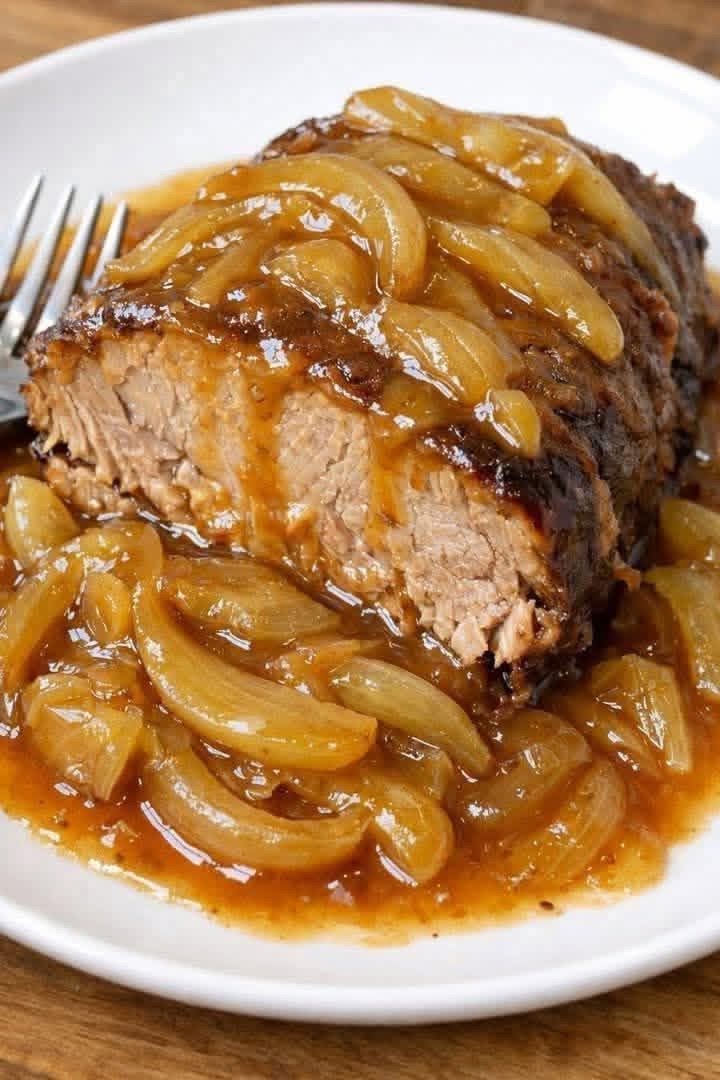
Why Make This Dish? This is the kind of honest, hearty meal that has been served at Amish family tables for generations. A simple pork roast cooks low and slow until it falls apart, bathed in a rich, savory onion gravy made from little more than sweet onions, broth, and a whisper of seasoning. There is no cream of anything soup, no complicated steps—just humble ingredients that transform into something deeply satisfying. This is slow cooker comfort at its most pure. Serve it over mashed potatoes or egg noodles, and you will understand why it is a classic.
Ingredients
One pork shoulder or pork butt (three to four pounds), two large yellow onions (thinly sliced), four cloves garlic (minced), two cups beef broth or chicken broth, one tablespoon Worcestershire sauce, one teaspoon salt, half teaspoon black pepper, one teaspoon dried thyme (or two sprigs fresh), and two tablespoons cornstarch mixed with two tablespoons cold water (optional, for thicker gravy). Optional: two tablespoons butter for sautéing onions.
Equipment Needed
A slow cooker (five to six quarts or larger), a large skillet (optional, for browning and sautéing), a sharp knife and cutting board, a whisk or fork, a small bowl for the slurry, tongs, and two forks for shredding.
Method
Pat the pork roast completely dry with paper towels. Season all sides generously with salt and pepper. If you have time, let it sit at room temperature for thirty minutes before cooking.
Optional but recommended for deeper flavor: Heat a tablespoon of oil in a large skillet over medium-high heat. Sear the pork roast on all sides until deeply golden brown, about three to four minutes per side. Transfer the seared pork to the slow cooker.
In the same skillet (or directly in the slow cooker if you did not sear), add the sliced onions and cook over medium heat for five to seven minutes, stirring occasionally, until softened and lightly golden. Add the minced garlic and cook for one more minute until fragrant. If you did not sear the pork, you can skip this step and add raw onions directly to the slow cooker, but sautéing adds sweetness and depth.
Place the onions and garlic in the slow cooker around the pork. Add the broth, Worcestershire sauce, and dried thyme (if using fresh thyme, tuck the sprigs alongside the pork).
Cover the slow cooker with the lid. Cook on LOW for eight to ten hours or on HIGH for five to six hours. The pork is done when it is fall-apart tender and shreds easily with a fork.
Carefully remove the pork from the slow cooker and place it on a cutting board or in a large bowl. Use two forks to shred the meat into large chunks, discarding any large pockets of fat. If you prefer sliced pork, let it rest for ten minutes, then slice against the grain.
While the pork shreds, prepare the gravy. Strain the cooking liquid through a fine-mesh sieve into a saucepan or a fat separator, or simply tilt the slow cooker and spoon off the excess fat from the surface. You want to keep the liquid but remove most of the fat. Reserve the cooked onions—they are delicious in the gravy.
If using a fat separator, pour the liquid into the separator, let the fat rise, and pour the defatted liquid into a saucepan. Add the reserved cooked onions.
Bring the liquid to a simmer over medium heat. If you want a thicker gravy, whisk the cornstarch and cold water together in a small bowl until smooth, then whisk the slurry into the simmering liquid. Cook for two to three minutes, whisking constantly, until the gravy thickens. If you prefer a thinner gravy, skip the cornstarch.
Taste the gravy and adjust seasoning with additional salt, pepper, or a splash of Worcestershire sauce.
Return the shredded or sliced pork to the slow cooker and pour the gravy over the top. Stir gently to coat the meat. Let it soak for ten to fifteen minutes on the WARM setting or LOW heat before serving.
Serve hot, spooning extra gravy over each portion.
Storage
Refrigerate in an airtight container for up to five days. The flavor improves overnight. Reheat gently on the stovetop or in the microwave. Freeze for up to three months. Thaw overnight in the refrigerator before reheating.
Variations
For a mushroom onion gravy version, add eight ounces of sliced cremini mushrooms along with the onions. For a beer braised version, replace one cup of the broth with dark beer or amber ale. For a garlic lovers version, double the garlic to eight cloves. For a herbed version, add one teaspoon of dried rosemary and one teaspoon of dried sage along with the thyme. For a balsamic version, add two tablespoons of balsamic vinegar to the cooking liquid. For a slow cooker with a sear function, use that feature to brown the pork and sauté the onions directly in the slow cooker insert before adding the liquid.
Serving Suggestions
Serve over creamy mashed potatoes—the classic pairing. Pair with buttered egg noodles or white rice. Serve alongside roasted carrots, green beans, or a simple green salad. Spoon over toasted bread for an open-faced sandwich. Garnish with fresh parsley or chives. Serve with crusty bread for dipping into the gravy.
Tips for Best Results
Use pork shoulder or pork butt, not pork loin. Pork shoulder has the fat and connective tissue needed to become fall-apart tender during long, slow cooking. Pork loin is too lean and will become dry and stringy no matter how long you cook it.
Pat the pork dry before seasoning. Dry meat takes seasoning better and develops a better crust if you choose to sear it. Even if you skip searing, patting dry prevents a wet surface that repels the seasoning.
Brown the pork for deeper flavor. The searing step is optional but highly recommended. The Maillard reaction creates a rich, caramelized crust that adds depth to both the meat and the gravy. If you are short on time, you can skip it—the slow cooker will still produce tender, flavorful pork—but the extra ten minutes is worth it.
Sauté the onions for sweetness. Raw onions cooked in the slow cooker will soften and release their flavor, but sautéing them first transforms them. The heat caramelizes their natural sugars, adding a sweet, savory depth that raw onions cannot match. This step takes five minutes and makes a noticeable difference.
Do not add extra salt until the end. Broth and Worcestershire sauce both contain salt. Taste the gravy before adding any additional salt. You probably will not need any.
Shred the pork in large chunks, not fine shreds. Fine shreds are great for pulled pork sandwiches, but for a gravy-based roast, larger chunks hold their texture better and feel more substantial. Use two forks to pull the meat apart into rustic, bite-sized pieces.
Skim the fat before making gravy. Pork shoulder releases a significant amount of fat during cooking. Remove most of it before thickening the gravy or it will be greasy. A fat separator is the easiest tool, but you can also tilt the slow cooker and spoon off the top layer of fat.
Let the pork soak in the gravy after shredding. The shredded meat is thirsty. Letting it sit in the defatted gravy for ten to fifteen minutes allows every strand to absorb flavor. This step makes the difference between good pork and great pork.
Save the cooking liquid even if you do not use it all. The liquid left after the pork is gone is liquid gold. Strain it and store it in the refrigerator. The fat will solidify on top, leaving a rich, flavorful broth underneath. Use it as a base for soup, to cook rice, or to braise vegetables.
Make it a day ahead. Like most slow cooker meals, this pork roast is even better the next day after the flavors have melded. Prepare, shred, and let it cool in the gravy overnight in the refrigerator. The next day, skim the solidified fat and reheat gently. Serve with fresh mashed potatoes for an almost effortless dinner.