
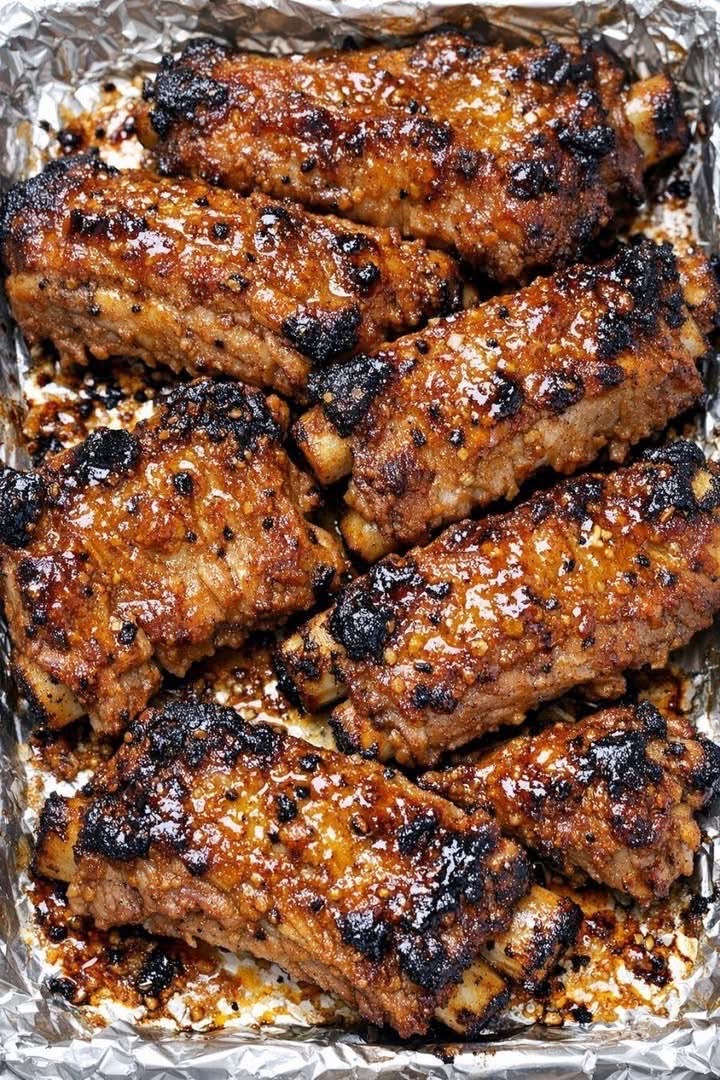
Why Make These Ribs? These ribs are tangy, sweet, and caramelized to perfection with almost no work. Just three ingredients and a slow cooker deliver fall-off-the-bone ribs with a sticky, golden mustard glaze that will have you licking your fingers. The slow cooker does the heavy lifting, making the meat impossibly tender, while a quick finish under the broiler gives you that caramelized, slightly charred exterior that makes ribs irresistible. This is the easiest way to get barbecue-style ribs without a grill or smoker.
Ingredients
Two racks of baby back ribs or St. Louis style ribs (about two to three pounds each), one cup yellow mustard, half cup honey, and one cup barbecue sauce (your favorite brand). Optional: half teaspoon red pepper flakes for heat.
Equipment Needed
A slow cooker (six quarts or larger, big enough to fit both racks), a sharp knife, a small bowl, a whisk or fork, a baking sheet, aluminum foil, tongs, and a basting brush.
Method
Remove the membrane from the back of the ribs for the most tender result. Slide a butter knife under the thin white membrane on the bone side of each rack. Loosen it, then grab it with a paper towel and pull it off in one piece. This step is optional but highly recommended—it allows seasonings and smoke to penetrate and prevents chewy toughness.
Cut each rack of ribs into three or four sections so they fit into your slow cooker. Place the rib sections in the slow cooker, stacking them if necessary.
In a small bowl, whisk together the yellow mustard, honey, and red pepper flakes if using until smooth. Pour the mustard mixture over the ribs, turning the sections with tongs to coat all sides evenly.
Cover the slow cooker with the lid. Cook on LOW for six to eight hours or on HIGH for three to four hours. The ribs are done when the meat is very tender and starts to pull away from the bones. Do not overcook or the ribs will fall apart completely.
Preheat your oven broiler to high. Line a baking sheet with aluminum foil and place a wire rack on top if you have one. This allows heat to circulate under the ribs as well.
Carefully remove the rib sections from the slow cooker and place them on the prepared baking sheet, bone side down. Discard the liquid left in the slow cooker or save it for another use (it makes a great soup base).
Brush the top of each rib section generously with barbecue sauce. Place the baking sheet under the broiler for two to three minutes, watching closely, until the sauce bubbles and caramelizes. Remove the baking sheet, flip the ribs, brush the other side with barbecue sauce, and broil for another two to three minutes. If you want extra sticky, caramelized ribs, repeat the saucing and broiling process one more time.
Let the ribs rest for five minutes before cutting into individual ribs. Serve hot with extra barbecue sauce on the side.
Storage
Refrigerate leftovers in an airtight container for up to four days. Reheat in a 175°C (350°F) oven for ten to fifteen minutes or in the microwave. Freeze for up to two months. Thaw overnight in the refrigerator before reheating. To reheat while keeping them sticky and caramelized, brush with a little extra barbecue sauce and warm in a hot oven.
Variations
For spicy mustard ribs, add one tablespoon of horseradish or one teaspoon of cayenne pepper to the mustard glaze. For bourbon mustard ribs, replace two tablespoons of honey with two tablespoons of bourbon. For apple cider ribs, add half a cup of apple cider vinegar to the slow cooker along with the mustard mixture. For brown sugar mustard ribs, replace the honey with brown sugar for a deeper, molasses-like sweetness. For honey mustard ribs with a kick, add one tablespoon of Dijon mustard and one teaspoon of smoked paprika to the glaze. For root beer ribs, replace the barbecue sauce with root beer for the final broiling step—brush with root beer instead of barbecue sauce for a sweet, unique glaze.
Serving Suggestions
Serve with creamy coleslaw and cornbread for a classic barbecue meal. Pair with baked beans, mac and cheese, or potato salad. Serve alongside roasted corn on the cob or grilled vegetables. Garnish with fresh parsley or chopped green onions. Provide extra napkins—these ribs are gloriously messy.
Tips for Best Results
Remove the membrane. That thin white layer on the bone side of the ribs turns chewy and tough when cooked. Removing it takes one minute and makes a noticeable difference in texture. Use a paper towel to grip the membrane—it is slippery.
Use yellow mustard, not Dijon or stone ground. Yellow mustard has the right tang and sweetness for this glaze. Dijon is too sharp and spicy. The cheap bright yellow stuff from the squeeze bottle is exactly what you need.
Cut the ribs to fit your slow cooker. Most racks are too long to fit whole. Cutting each rack into three or four sections allows them to fit neatly and cook evenly. Stack them if needed—the slow cooker will handle it.
Do not add extra liquid. The ribs release their own juices as they cook. The mustard and honey mixture, combined with the rendered fat, creates plenty of liquid. Adding broth or water will make the final glaze watery and less flavorful.
Cook on LOW for the most tender ribs. High heat works in a pinch, but low and slow breaks down the collagen more gradually, resulting in fall-off-the-bone meat that still holds together. Six to eight hours on LOW is the sweet spot.
Save the slow cooker liquid. The liquid left in the pot after cooking is intensely flavorful. Strain it and refrigerate. The fat will rise and solidify, leaving a rich, gelatinous broth underneath. Use it as a base for soup, to cook rice, or to braise vegetables.
Broil for caramelization, not longer cooking. The ribs are already fully cooked coming out of the slow cooker. The broiler is only there to caramelize the barbecue sauce and add a little char. Watch closely—sugar burns fast. Two to three minutes per side is usually enough.
Use a wire rack on the baking sheet. Elevating the ribs allows hot air to circulate underneath, caramelizing the bottom as well as the top. If you do not have a wire rack, flip the ribs carefully and watch for sticking.
Apply barbecue sauce in thin layers. A thick layer of sauce slides off and burns before caramelizing. Brush a thin, even layer, broil, then repeat for a sticky, lacquered finish. Two thin layers are better than one thick layer.
Let the ribs rest before cutting. Five minutes off the heat allows the juices to settle. Cutting immediately releases those juices onto the cutting board instead of keeping them in the meat. The ribs will be more flavorful and moist.