
Ingredients
For the pork:
-
Three to four pounds (1.3 to 1.8 kg) boneless pork shoulder or pork butt
-
One teaspoon salt
-
Half teaspoon black pepper
-
One tablespoon olive oil
-
One large onion, sliced
-
Four cloves garlic, minced
-
Two cups apple cider (not apple cider vinegar)
-
One cup chicken broth
-
Two tablespoons Dijon mustard
-
Two tablespoons brown sugar, packed
-
One teaspoon dried thyme
-
Half teaspoon ground cinnamon
-
Quarter teaspoon ground nutmeg
-
Two bay leaves
For the slurry (to thicken gravy):
-
Two tablespoons cornstarch
-
Two tablespoons cold water
Optional garnish:
-
Fresh thyme or rosemary sprigs
-
One apple, sliced (for serving)
Equipment Needed
-
Slow cooker (five to six quarts or larger)
-
Large skillet (for browning)
-
Tongs
-
Small bowl for slurry
-
Measuring cups and spoons
Method
Pat the pork roast dry with paper towels. Season all sides evenly with salt and black pepper.
Heat the olive oil in a large skillet over medium-high heat. When the oil is hot, add the pork roast. Sear for three to four minutes per side until deeply golden brown on all sides. Transfer the seared pork to the slow cooker.
In the same skillet, reduce the heat to medium. Add the sliced onion and cook for three to four minutes until softened. Add the minced garlic and cook for one minute until fragrant. Transfer the onions and garlic to the slow cooker, placing them around the pork.
In a medium bowl or directly into the slow cooker, combine the apple cider, chicken broth, Dijon mustard, brown sugar, dried thyme, ground cinnamon, ground nutmeg, and bay leaves. Whisk until the brown sugar dissolves. Pour the mixture over the pork.
Cover the slow cooker with the lid. Cook on LOW for seven to eight hours or on HIGH for four to five hours. The pork is done when it is fork-tender and shreds easily.
Carefully remove the pork roast from the slow cooker and place it on a cutting board. Tent loosely with foil to keep warm. Remove and discard the bay leaves.
Make the gravy. In a small bowl, whisk the cornstarch and cold water until smooth. Turn the slow cooker to HIGH. Whisk the cornstarch slurry into the apple cider cooking liquid. Cook for fifteen to twenty minutes, stirring occasionally, until the gravy thickens. Taste and adjust salt and pepper as needed.
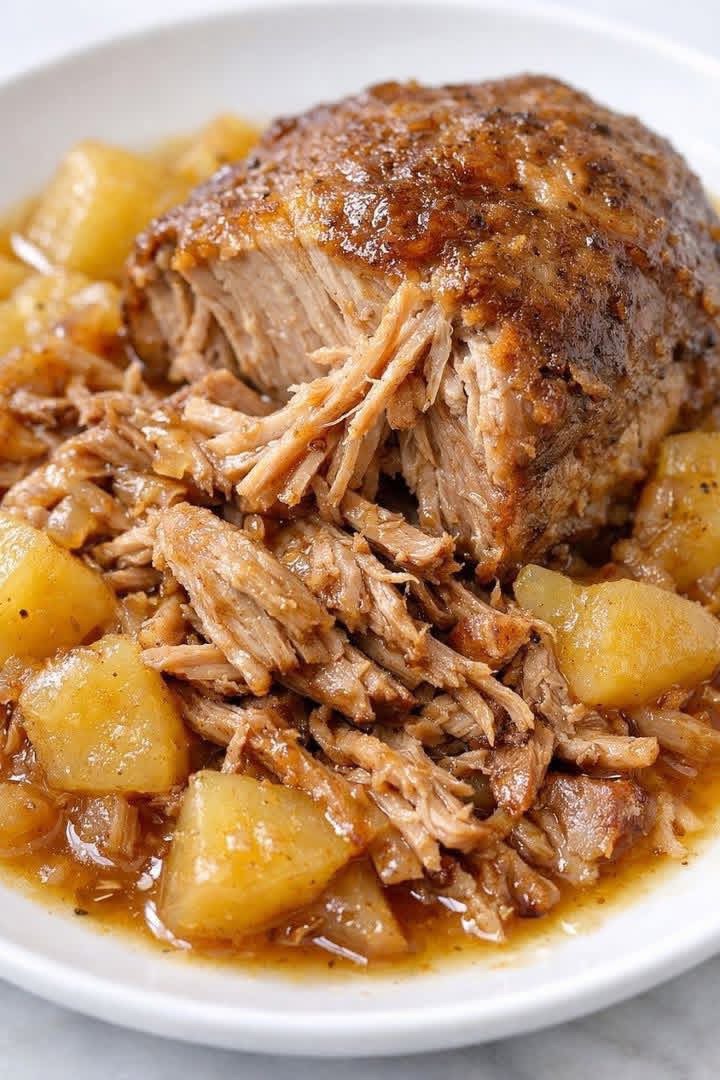
Shred the pork into large chunks using two forks, or leave it whole for slicing. Return the pork to the slow cooker and spoon the gravy over the top.
Serve hot, garnished with fresh thyme or rosemary and sliced apples if desired.
Serving Suggestions
-
Over creamy mashed potatoes
-
With roasted root vegetables (carrots, parsnips, sweet potatoes)
-
Over egg noodles or rice
-
On toasted brioche buns as pulled pork sandwiches
-
Alongside sautéed green beans or Brussels sprouts
Storage
Refrigerate in an airtight container for up to four days. The flavor improves overnight. Freeze for up to three months. Thaw overnight in the refrigerator before reheating. Reheat gently on the stovetop over low heat, adding a splash of broth or apple cider if the gravy is too thick.
Variations
For a sweeter version, add two tablespoons of honey or maple syrup along with the brown sugar. For a savory herb version, replace the cinnamon and nutmeg with one tablespoon of fresh rosemary and one tablespoon of fresh sage. For a root beer version, substitute the apple cider with root beer for a different sweet and tangy profile. For a vegetable packed version, add two chopped carrots and two chopped celery stalks along with the onion. For a spicy version, add half a teaspoon of red pepper flakes or one chopped jalapeño. For a keto/low-carb version, use unsweetened apple cider (or replace with more broth) and substitute the brown sugar with a keto-friendly sweetener.
Tips for Best Results
Brown the pork properly. Deep golden color equals deep flavor. Do not skip this step. Patting the pork dry before searing helps it brown instead of steam.
Use pork shoulder or pork butt. These cuts have enough fat and connective tissue to become tender and juicy in the slow cooker. Lean cuts like pork loin or tenderloin will become dry.
Do not use apple cider vinegar. The recipe calls for apple cider (non-alcoholic, unfiltered apple juice). Apple cider vinegar is much too acidic and will ruin the dish.
Pour the liquid around the pork, not over the top. Washing off the browned exterior with the liquid will wash away flavor. Pour the liquid gently around the sides.
Let the pork rest before shredding. Resting for ten minutes allows the juices to redistribute so the meat stays moist.
Thicken the gravy at the end. Cornstarch slurry added during the last fifteen to twenty minutes creates a perfect gravy. Adding it earlier can cause the gravy to break down.
Skim excess fat before thickening. Pork shoulder releases a fair amount of fat. Skim it off the surface of the liquid before adding the cornstarch slurry for a cleaner gravy.
Make it a day ahead. This pork roast tastes even better the next day after the flavors meld. Prepare, cool, and refrigerate overnight. Reheat gently on the stovetop or in the slow cooker.
Serve the pork in large chunks, not shredded fine. Large, tender chunks of pork hold more gravy and have a better texture than finely shredded meat.