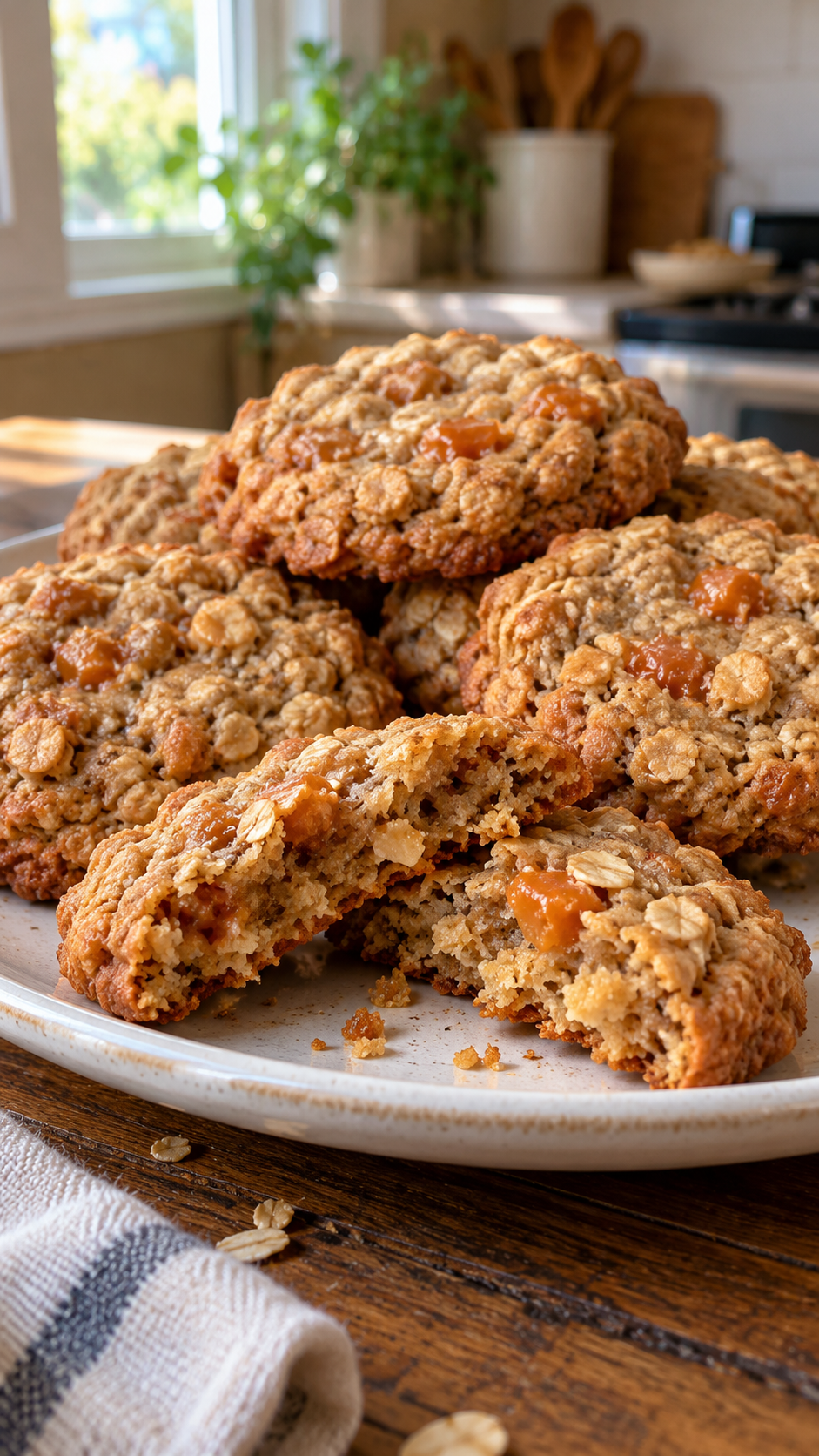
Some cookies are crisp and snappy. Others are soft and cakey. These
Oatmeal Toffee Cookies are the best of both worlds — soft, chewy centers with golden, slightly crisp edges, and buttery toffee bits in every bite.
They’re the kind of cookie that feels cozy and old-fashioned but has just enough of a sweet, buttery twist to feel special. The oats give them a hearty, chewy texture, the toffee bits add crunch and caramel-like sweetness, and a hint of cinnamon (if you use it) adds warmth.
Prep takes 15 minutes, the dough chills for 30 minutes, and each batch bakes in 10 to 12 minutes. The recipe makes about 36 cookies — perfect for cookie jars, lunchboxes, holiday platters, or an afternoon treat with a glass of milk.
Recipe Card
Oatmeal Toffee Cookies
Soft, chewy centers, golden edges, and buttery toffee bits make these oatmeal cookies a cozy treat for sharing—or enjoying with a glass of milk!
Prep Time: 15 minutes |
Chill Time: 30 minutes |
Bake Time: 10–12 minutes per batch
Makes: About 36 cookies
Ingredients
- 1 cup unsalted butter, softened
- 1 cup packed light brown sugar
- ½ cup granulated sugar
- 2 large eggs
- 2 teaspoons vanilla extract
- 1½ cups all-purpose flour
- 1 teaspoon baking soda
- ½ teaspoon salt
- ½ teaspoon ground cinnamon, optional
- 3 cups old-fashioned rolled oats
- 1 cup toffee baking bits
Instructions
- Make the dough: Beat the softened butter, brown sugar, and granulated sugar together for 2–3 minutes, until light and fluffy.
- Add the eggs one at a time, beating after each addition. Mix in the vanilla.
- In a separate bowl, whisk together the flour, baking soda, salt, and cinnamon, if using.
- Gradually mix the dry ingredients into the butter mixture just until combined. Fold in the oats and toffee bits.
- Cover and refrigerate the dough for 30 minutes. Meanwhile, preheat your oven to 350°F (175°C) and line baking sheets with parchment paper.
- Scoop rounded 1½-tablespoon portions onto the prepared sheets, leaving about 2 inches between cookies.
- Bake for 10–12 minutes, until the edges are golden and the centers look just set. Avoid overbaking to keep them chewy.
- Let cool on the baking sheets for 5–10 minutes before transferring to a wire rack. The cookies will firm up as they cool.
Tip: Use small, crunchy toffee baking bits rather than soft caramel cubes. Store completely cooled cookies in an airtight container to help keep them soft.
Why This Recipe Works
The butter and brown sugar combination creates a soft, chewy texture. Brown sugar contains molasses, which adds moisture and a deeper, caramel-like flavor. Combined with softened butter, it creates a cookie that stays soft and chewy for days.
Beating the butter and sugars until light and fluffy adds air. This step incorporates air into the dough, which helps the cookies rise and gives them a tender, light texture. Don’t rush it — a full 2–3 minutes makes a difference.
Old-fashioned rolled oats are the key to a hearty, chewy cookie. Unlike quick oats, rolled oats hold their shape and texture during baking, giving the cookies a satisfying chew. They also add a subtle nutty flavor.
The toffee bits are the star of the show. They melt slightly during baking, creating pockets of buttery, caramel-like sweetness and a little crunch. They’re what makes these cookies feel extra special.
Chilling the dough prevents spreading and deepens the flavor. A 30-minute chill firms up the butter, which keeps the cookies from spreading too much in the oven. It also gives the oats time to absorb moisture, resulting in a chewier cookie.
Undercooking slightly keeps them chewy. Pulling the cookies out when the centers look just set — not fully baked — ensures they stay soft and chewy as they cool. They’ll continue to firm up on the baking sheet.
The optional cinnamon adds warmth and depth. It’s a small addition, but it complements the toffee and oats beautifully, giving the cookies a cozy, old-fashioned flavor.
Pro Tips for Perfect Results Every Time
Use softened butter, not melted. Softened butter creams properly with the sugars, creating air pockets that make the cookies light and tender. Melted butter will make them flat and greasy.
Beat the butter and sugars for the full 2–3 minutes. This step is essential for a light, fluffy dough. The mixture should look pale and creamy before you add the eggs.
Add the eggs one at a time. Adding them all at once can cause the mixture to curdle. Beat each egg in fully before adding the next.
Measure the flour carefully. Spoon the flour into the measuring cup and level it off with a knife. Packed flour will make the cookies dry and crumbly.
Don’t overmix once the flour goes in. Stir just until the flour disappears. Overmixing develops gluten and makes the cookies tough.
Use old-fashioned rolled oats, not quick oats. Rolled oats give the cookies their signature chewy texture. Quick oats will make them softer and less hearty.
Use crunchy toffee baking bits, not soft caramel cubes. Soft caramel will melt into puddles and make the cookies sticky. Crunchy toffee bits hold their shape and add crunch.
Chill the dough for at least 30 minutes. This prevents spreading and gives the oats time to absorb moisture. If your kitchen is warm, chill for up to an hour.
Scoop uniform portions. Use a cookie scoop or a measuring tablespoon to make sure all the cookies are the same size. Uniform cookies bake evenly.
Leave about 2 inches between cookies on the baking sheet. They spread as they bake, so they need room. Crowding will cause them to merge.
Watch the bake time carefully. Ovens vary, and these cookies go from chewy to crunchy quickly. Start checking at 10 minutes.
Pull them out when the centers look just set. The cookies will continue to firm up on the baking sheet. If they look fully baked in the oven, they’ll be crunchy when cooled.
Let them cool on the baking sheet for 5–10 minutes. This allows them to set before you transfer them to a wire rack. Moving them too soon can cause them to break apart.
Store them with a slice of bread to keep them soft. A slice of bread in the cookie container releases moisture and helps the cookies stay chewy.
Variations and Substitutions
Add chocolate chips. Substitute 1 cup of the toffee bits with chocolate chips, or add ½ cup of chocolate chips along with the toffee for a chocolate-toffee version.
Add nuts. Chopped pecans, walnuts, or almonds add crunch and a nutty flavor. Use about 1 cup.
Add dried fruit. Dried cranberries, raisins, or chopped dates add sweetness and chew. Use about 1 cup.
Make them spicier. Add a pinch of nutmeg or cardamom along with the cinnamon for a warmer, more complex flavor.
Use dark brown sugar instead of light. Dark brown sugar has more molasses, which gives the cookies a deeper, richer flavor.
Make them gluten-free. Use a 1-to-1 gluten-free all-purpose flour blend and verify that your oats and toffee bits are gluten-free.
Make them dairy-free. Use dairy-free butter and dairy-free toffee bits (or substitute with dairy-free chocolate chips).
Make them smaller. Use a 1-tablespoon scoop for smaller cookies and reduce the bake time to 8–10 minutes.
Make them larger. Use a 2-tablespoon scoop for larger cookies and increase the bake time to 12–14 minutes.
Make them a sandwich cookie. Spread a little buttercream or caramel between two cooled cookies for an indulgent sandwich cookie.
Storage and Reheating
Room temperature: Store completely cooled cookies in an airtight container at room temperature for up to 1 week. Add a slice of bread to the container to help keep them soft.
Refrigerator: For longer storage, keep cookies in an airtight container in the refrigerator for up to 2 weeks. Bring to room temperature before serving.
Freezer: These cookies freeze beautifully. Store baked cookies in a freezer-safe bag or container for up to 3 months. You can also freeze the unbaked dough in balls, then bake from frozen, adding 1–2 minutes to the bake time.
Make ahead: Prepare the dough up to 3 days in advance and refrigerate it covered. Or scoop the dough into balls, freeze them, and bake whenever a craving strikes.
No reheating needed: These cookies are best at room temperature. If they soften too much, a quick 3–4 minutes in a 300°F (150°C) oven will crisp them back up.
What to Serve With Them
These cookies are delicious on their own, but a few accompaniments take them to the next level:
- A cold glass of milk — the classic pairing
- A cup of hot coffee or tea
- A scoop of vanilla ice cream for an ice cream sandwich
- Hot cocoa on a chilly evening
- Fresh fruit — apples or berries for a lighter pairing
- A drizzle of caramel for extra indulgence
Frequently Asked Questions
Can I use quick oats instead of rolled oats?
You can, but the texture will be different. Quick oats make the cookies softer and less chewy. Old-fashioned rolled oats give you that signature hearty texture.
Why did my cookies spread too much?
The dough was too warm, or the butter was too soft. Chill the dough for the full 30 minutes, and make sure your butter is softened but still cool to the touch.
Why did my cookies turn out dry?
The flour was packed too tightly, or the cookies were overbaked. Measure the flour by spooning it into the cup and leveling it off, and pull the cookies out when the centers look just set.
Can I skip the chill time?
You can, but the cookies will spread more and have a flatter texture. The chill time is what gives them their thick, chewy texture.
Can I use soft caramel cubes instead of toffee bits?
It’s not recommended. Soft caramel melts into puddles and makes the cookies sticky. Crunchy toffee baking bits hold their shape and add crunch.
Can I add chocolate chips?
Yes. Substitute 1 cup of the toffee bits with chocolate chips, or add ½ cup of chocolate chips along with the toffee.
Can I make these gluten-free?
Yes. Use a 1-to-1 gluten-free all-purpose flour blend and verify that your oats and toffee bits are gluten-free.
Can I freeze the dough?
Yes. Scoop the dough into balls, freeze them on a baking sheet until solid, then transfer to a freezer bag. Bake from frozen, adding 1–2 minutes to the bake time.
How do I keep the cookies soft?
Store them in an airtight container with a slice of bread. The bread releases moisture and helps the cookies stay chewy.
Can I make these cookies smaller or larger?
Yes. Use a 1-tablespoon scoop for smaller cookies (bake 8–10 minutes) or a 2-tablespoon scoop for larger cookies (bake 12–14 minutes).
Can I make these dairy-free?
Yes. Use dairy-free butter and dairy-free toffee bits, or substitute with dairy-free chocolate chips.
How long do these cookies last?
Up to 1 week at room temperature in an airtight container, or up to 2 weeks in the refrigerator.
Final Thoughts
These
Oatmeal Toffee Cookies are everything a great cookie should be: soft, chewy, buttery, and packed with sweet, crunchy toffee bits. The oats give them a hearty texture, the brown sugar adds depth, and the toffee bits make every bite feel special.
They’re perfect for cookie jars, lunchboxes, holiday platters, or an afternoon treat with a glass of milk. And because they freeze beautifully, you can bake a batch and have cookies ready whenever a craving strikes.
If you make these cookies, I’d love to hear how they turned out. Did you add chocolate chips? Use dark brown sugar? Try them as sandwich cookies? Drop a comment below and let me know — and if you’re planning to make them, save this recipe for your next baking day.