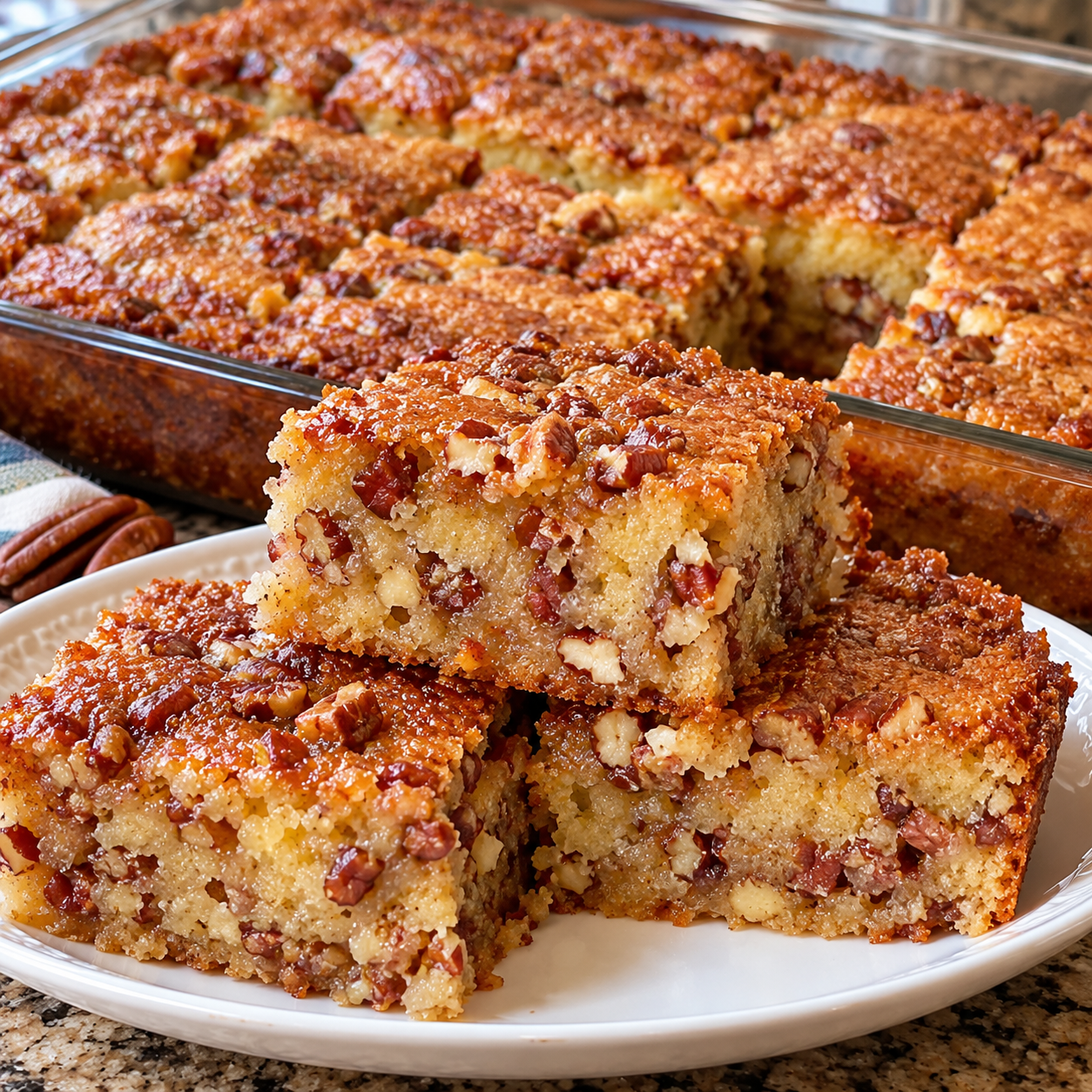
Bottom line up front: This is a complete, ready-to-publish blog article for a Georgia Cornbread Cake recipe. It includes the recipe card, why the dish works, pro tips, variations, storage advice, FAQs, and serving suggestions — everything you need for a full blog post that ranks and converts.
Introduction
If you’ve never heard of Georgia Cornbread Cake, the name might confuse you. Cornbread? In a cake? But here’s the delightful truth:
there’s no cornmeal in this cake at all. The name comes from the texture — finely chopped pecans give this sweet, golden cake a crumb that resembles cornbread, but the flavor is pure Southern dessert.
This
Georgia Cornbread Cake is an old-fashioned recipe that’s been passed down through generations of Southern cooks. It’s golden, buttery, and packed with crunchy pecans. The center is moist and chewy — almost like a blondie — while the edges get a beautiful golden crust. It’s the kind of cake that’s simple enough for a weeknight treat but special enough for family gatherings, potlucks, and holiday tables.
Prep is quick, the bake takes about 30 to 35 minutes, and it serves a crowd. Best of all, it comes together with basic pantry ingredients you probably already have on hand.
Recipe Card
Georgia Cornbread Cake – Sweet Southern Pecan Cake
Golden, buttery, and packed with crunchy pecans! This old-fashioned Georgia Cornbread Cake is a delicious Southern dessert with a moist, chewy center and a beautiful golden crust. Despite its name, there’s no cornmeal in this sweet treat!
⏱ Prep: 10 minutes
🔥 Bake: 30–35 minutes
🍽 Servings: 24–28 squares
🛒 Ingredients
- 🥚 4 large eggs
- 🍬 1 cup granulated sugar
- 🤎 1 cup packed brown sugar
- 🛢️ 1 cup vegetable oil
- 🌾 1½ cups all-purpose flour (or self-rising flour)
- 🥜 2 cups chopped pecans
- 🌼 1 teaspoon vanilla extract
👩🍳 Instructions
- Preheat the oven to 350°F (175°C). Lightly grease and flour a 9×13-inch baking dish.
- In a large bowl, beat the eggs. Add the granulated sugar, brown sugar, and vanilla. Mix well.
- Stir in the oil until smooth.
- Add the flour and mix until just combined.
- Fold in the chopped pecans and stir until evenly distributed.
- Pour the batter into the prepared baking dish and spread evenly.
- Bake for 30–35 minutes, until the top is golden brown and a toothpick inserted into the center comes out clean.
- Let the cake cool completely in the pan on a wire rack before cutting into squares. The center will be soft and chewy — this is normal and delicious.
Why This Recipe Works
The name is deceiving — and that’s part of the charm. There’s no cornmeal anywhere in this recipe. The “cornbread” texture comes entirely from the finely chopped pecans, which give the cake a slightly grainy, cornbread-like crumb. It’s a quirky old-fashioned name that’s stuck around for good reason.
Brown sugar and oil create an incredibly moist cake. The combination of granulated and brown sugar adds depth and a caramel-like richness, while the oil keeps the cake tender and moist for days. This isn’t a dry, crumbly cake — it’s dense, chewy, and almost blondie-like in the center.
Two cups of pecans means every bite has crunch. This isn’t a cake with a few token nuts scattered in. The pecans are the star, providing texture, nutty flavor, and that signature cornbread-like crumb.
It’s a one-bowl wonder. No mixer required, no creaming butter and sugar, no sifting. Just stir everything together, pour, and bake. It’s the kind of recipe that’s perfect for beginner bakers and busy cooks alike.
The edges get golden and slightly crisp. As the cake bakes, the edges develop a beautiful golden crust while the center stays soft and chewy. If you’re an edge person, this cake is for you.
It’s a crowd-pleaser every single time. This cake shows up at potlucks, church suppers, family reunions, and holiday gatherings across the South. It’s beloved for its simplicity and its universally appealing flavor — sweet, nutty, and buttery.
Pro Tips for Perfect Results Every Time
Chop the pecans finely, but not into dust. The texture of this cake depends on the pecans. You want small, even pieces — about the size of a lentil — so they distribute evenly and create that cornbread-like crumb. A food processor works, but pulse carefully to avoid turning them into powder.
Use self-rising flour if you have it. Many traditional versions of this recipe call for self-rising flour. If you only have all-purpose flour, you can use it as-is — the cake will still be delicious, just slightly less rise. If you want to mimic self-rising flour, add 1½ teaspoons baking powder and ½ teaspoon salt to each cup of all-purpose flour.
Don’t overmix once the flour goes in. Stir just until the flour disappears. Overmixing develops gluten and can make the cake tough instead of tender and chewy.
The center will look slightly underdone — that’s perfect. This cake is meant to be moist and chewy in the middle. A toothpick inserted into the center should come out with a few moist crumbs, not completely clean. If it comes out clean, you’ve likely overbaked it.
Let it cool completely before cutting. The cake continues to set as it cools. Cutting too early will give you messy squares. Patience here rewards you with clean, beautiful pieces.
Grease and flour the pan thoroughly. This cake has a tendency to stick, especially around the edges where it gets golden and crisp. Grease the pan generously and dust with flour, or use a baking spray with flour built in.
Serve it warm or at room temperature. Warm, it’s soft and gooey. At room temperature, the flavors meld and the texture becomes more chewy and blondie-like. Both are delicious.
Add a dollop of whipped cream or a drizzle of caramel. The cake is delicious on its own, but a little something extra takes it over the top.
Variations and Substitutions
Add chocolate chips. Substitute 1 cup of the pecans with chocolate chips, or add ½ cup of chocolate chips along with the pecans for a chocolate-pecan version that tastes like a blondie with chocolate.
Try a caramel drizzle. A warm caramel sauce drizzled over the top turns this into a showstopper dessert.
Add citrus zest. A teaspoon of orange or lemon zest adds a bright, fresh note that complements the pecans beautifully.
Add cinnamon. A teaspoon of cinnamon in the batter adds warmth and makes the cake feel even more like a cozy autumn treat.
Use applesauce instead of oil. For a lighter version, substitute the oil with unsweetened applesauce. The texture will be slightly different — less rich, more spongy — but still delicious.
Make it in a cast-iron skillet. Some old-fashioned versions bake this cake in a cast-iron skillet with melted butter, which gives it an incredible crispy, buttery edge.
Toast the pecans first. Toasting the pecans for 5–7 minutes in the oven before chopping deepens their flavor and makes the cake even more nutty and aromatic.
Make it gluten-free. Use a 1-to-1 gluten-free all-purpose flour blend in place of the regular flour. The texture will be slightly denser, but it still works beautifully.
Storage and Reheating
Room temperature: Store cooled cake in an airtight container at room temperature for up to 4 days. The cake stays moist thanks to the oil and brown sugar.
Refrigerator: For longer storage, keep the cake in an airtight container in the refrigerator for up to 1 week. Bring to room temperature before serving for the best flavor and texture.
Freezer: This cake freezes beautifully. Cut it into squares, wrap each piece tightly in plastic wrap, and then place them in a freezer-safe bag or container. Freeze for up to 3 months. Thaw at room temperature before serving.
Reheating: If you prefer your cake warm, a quick 15–20 seconds in the microwave brings back that fresh-from-the-oven softness. You can also warm it in a 300°F (150°C) oven for 5–10 minutes.
Make ahead: This cake is an excellent make-ahead dessert. It tastes even better the next day as the flavors meld. Bake it a day in advance, store it covered, and serve when ready.
What to Serve With It
This cake is delicious on its own, but a few accompaniments take it to the next level:
- A dollop of whipped cream — the classic pairing
- A drizzle of caramel sauce — for an indulgent treat
- A scoop of vanilla ice cream — warm cake, cold ice cream
- A cup of hot coffee or tea — perfect for an afternoon treat
- Fresh berries — strawberries or raspberries add a tart contrast
- A sprinkle of powdered sugar — simple and elegant
- Honey or maple syrup — a light drizzle adds sweetness
Frequently Asked Questions
Is there really no cornmeal in this cake?
Correct — there’s no cornmeal at all. The name comes from the texture that the finely chopped pecans create, which resembles cornbread.
Why is it called Georgia Cornbread Cake if there’s no cornbread in it?
It’s an old-fashioned Southern name. The cake looks like cornbread and has a similar crumbly texture, but it’s a sweet dessert cake, not a savory bread.
Can I use all-purpose flour instead of self-rising flour?
Yes. The cake will still be delicious. For a closer match to self-rising flour, add 1½ teaspoons baking powder and ½ teaspoon salt per cup of all-purpose flour.
Why is the center of my cake still soft?
That’s intentional! This cake is meant to be moist and chewy in the center, almost like a blondie. A toothpick should come out with a few moist crumbs, not completely clean.
Can I use a different nut instead of pecans?
Pecans are traditional and give the cake its signature texture. However, walnuts or a mix of pecans and walnuts would also work well.
How finely should I chop the pecans?
Chop them finely — about the size of small lentils — so they distribute evenly and create that cornbread-like texture. Avoid turning them into a powder.
Can I make this cake in a different pan size?
Yes. A 9×13 pan is standard, but you can also use two 8×8 pans or a 10-inch cast-iron skillet. Adjust the baking time as needed — smaller pans will bake faster.
Is this cake very sweet?
It’s sweet but not cloying. The brown sugar adds depth, and the pecans balance the sweetness with their natural richness. It’s a “not-too-sweet” dessert, which is part of its appeal.
Can I freeze this cake?
Yes, it freezes beautifully. Cut into squares, wrap tightly, and freeze for up to 3 months. Thaw at room temperature before serving.
What’s the best way to serve it?
Warm or at room temperature, with whipped cream, a drizzle of caramel, or a scoop of vanilla ice cream. It’s also delicious alongside a cup of coffee or tea.
Final Thoughts
This
Georgia Cornbread Cake is a true Southern classic — golden, buttery, and packed with crunchy pecans. It’s the kind of recipe that’s been passed down through generations, and one bite explains why. The center is moist and chewy, the edges are golden and slightly crisp, and the flavor is pure comfort.
It’s simple enough for a weeknight treat but special enough for holidays and gatherings. And once you make it, you’ll understand why this quirky little cake with the confusing name has stuck around for so long.
If you make this cake, I’d love to hear how it turned out. Did you add chocolate chips? Use a cast-iron skillet? Drizzle it with caramel? Drop a comment below and let me know — and if you’re planning to make it, pin this recipe so you can find it again on a cozy afternoon.