
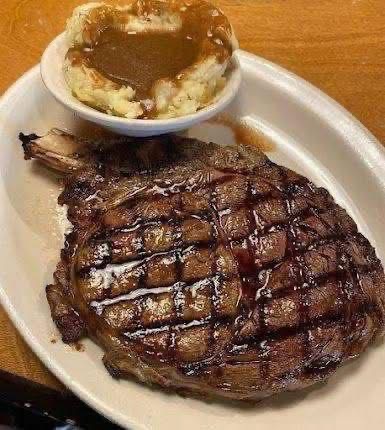
Why Make This Steak? This is the juicy, buttery, boldly seasoned steak that tastes just like the one from your favorite roadside steakhouse. Texas Roadhouse is famous for hand-cut steaks seared at high heat, topped with a pat of garlicky herb butter that melts into every bite. The secret is the signature seasoning blend—a smoky, peppery, slightly sweet rub—and the sizzling hot pan that creates a deep brown crust while keeping the inside perfectly medium-rare. This recipe brings that whole experience to your own kitchen.
Ingredients
For the steak: two boneless ribeye or New York strip steaks (about one to one and a half inches thick, 10 to 12 ounces each), one tablespoon olive oil or avocado oil, and two tablespoons unsalted butter.
For the Texas Roadhouse seasoning blend: one tablespoon kosher salt, one tablespoon coarse black pepper, one teaspoon smoked paprika, one teaspoon garlic powder, one teaspoon onion powder, half teaspoon cayenne pepper (optional, for heat), and half teaspoon brown sugar (optional, for subtle sweetness). This makes more than you need for two steaks; store the extra in a jar.
For the garlic herb butter (optional but recommended): four tablespoons unsalted butter (softened), one clove garlic minced (or half teaspoon garlic powder), one teaspoon fresh parsley finely chopped, half teaspoon fresh thyme leaves (or pinch of dried), and a pinch of salt.
Equipment Needed
A large cast-iron skillet or heavy-bottomed stainless steel pan, tongs, a meat thermometer (highly recommended), a small bowl for the seasoning, a small bowl for the compound butter, a cutting board, and aluminum foil. An oven-safe skillet is helpful if finishing thick steaks in the oven.
Method
Remove the steaks from the refrigerator thirty to sixty minutes before cooking. Pat them completely dry with paper towels. Letting them come to room temperature ensures even cooking.
Make the garlic herb butter (if using). In a small bowl, mash together the softened butter, minced garlic, parsley, thyme, and a pinch of salt until well combined. Spoon the butter onto a piece of plastic wrap, roll it into a log, and twist the ends. Refrigerate until firm, or at least fifteen minutes. You can also make this days ahead.
Make the seasoning blend. In a small bowl, combine the kosher salt, coarse black pepper, smoked paprika, garlic powder, onion powder, cayenne pepper (if using), and brown sugar (if using). Stir or whisk until evenly mixed.
Season the steaks generously on all sides, including the edges. Use about one tablespoon of seasoning per steak. Press the seasoning into the meat with your hands so it adheres. Do not be shy—Texas Roadhouse steaks are boldly seasoned.
Heat a large cast-iron skillet over medium-high heat for three to five minutes until it is very hot. A drop of water should sizzle and evaporate instantly. Add the olive oil and swirl to coat the bottom of the pan.
Carefully place the steaks in the hot skillet. Do not crowd the pan—cook one steak at a time if your skillet is small. Press down gently with tongs to ensure full contact with the pan. Sear undisturbed for two to three minutes for a one-inch steak, or three to four minutes for a one-and-a-half-inch steak, until a deep brown crust forms.
Flip the steaks using tongs. Add the two tablespoons of butter to the pan. Tilt the pan slightly so the butter pools, then use a spoon to baste the steaks with the melted butter repeatedly for one to two minutes.
Continue cooking to your desired doneness, using a meat thermometer for accuracy: 49°C to 52°C (120°F to 125°F) for rare, 54°C to 57°C (130°F to 135°F) for medium-rare, 60°C to 63°C (140°F to 145°F) for medium. For a one-inch steak, medium-rare takes about two to three minutes on the second side. For thicker steaks, you may need to transfer the skillet to a 190°C (375°F) oven for three to five minutes after searing.
Transfer the steaks to a cutting board. Immediately place a slice of the garlic herb butter (or one tablespoon of plain butter) on top of each steak. Loosely tent with aluminum foil and let rest for five to ten minutes. Resting allows the juices to redistribute.
Slice the steaks against the grain (across the muscle fibers) for the most tender bites. Serve with extra garlic herb butter on the side.
Storage
Steak is best eaten fresh. Leftover cooked steak can be refrigerated in an airtight container for up to three days. Reheat gently in a skillet over low heat with a splash of broth, or slice thinly and serve cold over salads. Do not microwave—it will become tough. Freezing cooked steak is not recommended.
Variations
For a ribeye version, use bone-in ribeye for extra marbling and flavor. Cook as directed, adding an extra minute per side for the thicker cut. For a sirloin version, use top sirloin which is leaner and cooks faster. Reduce cooking time by about one minute per side. For a filet mignon version, use two-inch thick filets. Sear for three minutes per side, then transfer to a 190°C (375°F) oven for six to eight minutes. For a grilled version, preheat your grill to high heat. Cook steaks for three to four minutes per side over direct heat, then move to indirect heat if needed to finish. For a blackened version, increase the cayenne pepper to one teaspoon and sear in a smoking hot cast-iron skillet with no butter (the butter would burn).
Serving Suggestions
Serve with a loaded baked potato (butter, sour cream, chives, bacon, and cheese) just like Texas Roadhouse. Pair with seasoned green beans, buttery corn on the cob, or a house salad with honey mustard dressing. Add a side of Texas Roadhouse-style buttered rolls with cinnamon honey butter. Serve with sautéed mushrooms and onions. Top with crumbled blue cheese or crispy fried onions.
Tips for Best Results
Bring steaks to room temperature before cooking. A cold steak straight from the refrigerator sears unevenly—the outside burns before the inside cooks. Let the steaks sit on the counter for thirty to sixty minutes before they hit the pan. They will cook more evenly and develop a better crust.
Pat the steaks completely dry. Moisture is the enemy of a good crust. Water on the surface creates steam instead of sear. Use paper towels to blot both sides until the surface feels tacky. If the paper towel sticks slightly, you are ready.
Use a heavy-bottomed skillet. Cast iron is ideal because it holds heat and distributes it evenly. A thin non-stick pan will not get hot enough to create the crust you want. Stainless steel works well too.
Do not move the steak while searing. Resist the urge to peek, poke, or slide it around. Let it sit undisturbed for two to four minutes. When it is ready, it will release easily from the pan. If it sticks, wait another minute.
Use a meat thermometer. Guessing doneness by time or touch is unreliable because steak thickness and pan temperature vary. A digital instant-read thermometer takes the guesswork out. For medium-rare, pull the steak at 54°C to 57°C (130°F to 135°F). The temperature will rise another three to five degrees during rest.
Baste with butter for extra flavor and a beautiful sheen. During the last minute of cooking, add butter to the pan and tilt it so the butter pools. Spoon the hot butter over the steaks repeatedly. This adds richness and helps create that glossy steakhouse finish.
Let the steak rest before slicing. This is non-negotiable. Resting allows muscle fibers to relax and reabsorb juices. Slicing immediately releases all those juices onto the cutting board, leaving you with dry steak. Five to ten minutes covered loosely with foil is perfect.
Slice against the grain. Look at the direction of the muscle fibers running through the steak. Slice perpendicular to them. This shortens the fibers so each bite is tender, not stringy.
Make extra garlic herb butter. This butter is fantastic on baked potatoes, rolls, roasted vegetables, or even stirred into rice. Make a double batch and keep it in the refrigerator for up to two weeks, or freeze for up to three months. Slice off a pat whenever you need it.
Do not skip the seasoning blend. The signature Texas Roadhouse flavor comes from that specific mix of salt, coarse pepper, paprika, and garlic. Grinding your own coarse black pepper (or using a coarse grind setting) makes a difference. Fine powder pepper does not create the same texture.