
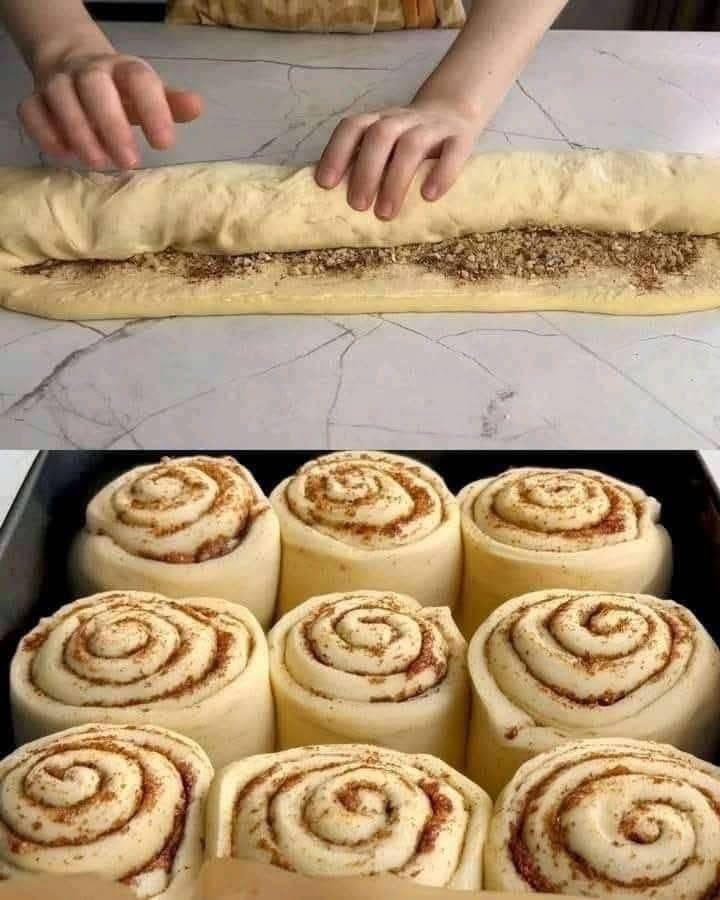
Why Make These Cinnamon Rolls? These are the cinnamon rolls of your dreams—pillowy soft, deeply fragrant with cinnamon and brown sugar, and topped with a silky cream cheese glaze that seeps into every swirl. They are made from scratch but the process is straightforward, and the results are spectacularly better than anything from a can. The dough is tender and rich, the filling is buttery and spiced, and the glaze is tangy and sweet. Perfect for Christmas morning, lazy Sundays, or any time you want to fill your kitchen with the smell of heaven.
Ingredients
For the dough: one cup whole milk (warm, about 43°C to 46°C / 110°F to 115°F), one packet (2 and a quarter teaspoons) active dry yeast, one quarter cup granulated sugar, one third cup unsalted butter (melted and slightly cooled), one teaspoon salt, one large egg (room temperature), and three and a half to four cups all-purpose flour.
For the filling: one cup packed brown sugar (light or dark), two and a half tablespoons ground cinnamon, one third cup unsalted butter (very soft, almost melted).
For the cream cheese glaze: four ounces cream cheese (softened), one quarter cup unsalted butter (softened), one cup powdered sugar (sifted), half teaspoon vanilla extract, and two to three tablespoons milk (room temperature).
Equipment Needed
A large mixing bowl or stand mixer with dough hook, a clean kitchen towel or plastic wrap, a rolling pin, a sharp knife or dental floss for cutting rolls, a 9×13 inch baking dish, a small saucepan, a rubber spatula, and a wire rack.
Method
Make the dough. In a small bowl or the bowl of your stand mixer, combine the warm milk and a pinch of the sugar. Sprinkle the yeast over the top. Let it sit for five to ten minutes until foamy and bubbly. If it does not foam, your yeast is dead—start over with fresh yeast.
Add the remaining sugar, melted butter, salt, and egg. Whisk or mix until combined. Add two cups of flour and mix until smooth. Gradually add the remaining flour, half cup at a time, until the dough pulls away from the sides of the bowl and is soft but not sticky. You may not need all the flour.
Knead the dough. If using a stand mixer with a dough hook, knead on medium-low speed for five to seven minutes until the dough is smooth and elastic. If kneading by hand, turn the dough onto a lightly floured surface and knead for eight to ten minutes.
First rise. Place the dough in a lightly greased bowl, turning once to coat. Cover with a clean kitchen towel or plastic wrap. Let it rise in a warm, draft-free place for one to two hours, until doubled in size. Punch down the dough to release the air.
Make the filling. In a small bowl, mix the brown sugar and cinnamon together until well combined. Set aside.
Roll out the dough. On a lightly floured surface, roll the dough into a large rectangle about 15×9 inches (38×23 cm). The dough should be about a quarter inch thick.
Spread the softened butter evenly over the entire surface of the dough, all the way to the edges. Sprinkle the cinnamon sugar mixture evenly over the butter, leaving a half-inch border on one long edge. Pat the filling down gently so it sticks.
Roll the dough. Starting from the long edge opposite the half-inch border, roll the dough up tightly into a log. Use both hands and keep the roll even. Pinch the seam closed to seal.
Cut the rolls. Using a sharp knife or a piece of dental floss, cut the log into nine or twelve even rolls, each about one to one and a half inches thick. For dental floss: slide a piece of unflavored floss under the log, cross the ends over the top, and pull tight to slice cleanly through without squishing.
Second rise. Arrange the rolls cut-side up in a greased 9×13 inch baking dish, leaving a little space between each for expansion. Cover with a towel and let them rise again for thirty to forty five minutes, until puffy and touching each other.
While the rolls rise, preheat your oven to 190°C (375°F).
Bake the rolls for twenty to twenty five minutes, until the tops are golden brown and the centers are cooked through. If the tops brown too quickly, loosely cover with foil for the last five minutes.
While the rolls bake, make the glaze. In a mixing bowl, beat the softened cream cheese and butter until smooth and creamy. Add the powdered sugar and vanilla extract. Beat until combined. Add milk one tablespoon at a time until the glaze is thick but pourable.
Let the cinnamon rolls cool in the pan for five to ten minutes. Then spread the cream cheese glaze generously over the warm rolls, letting it melt into the swirls.
Serve warm.
Storage
Store unfrosted rolls in an airtight container at room temperature for up to two days. Frosted rolls should be refrigerated for up to five days. Reheat individual rolls in the microwave for twenty to thirty seconds or in a 175°C (350°F) oven for eight to ten minutes. Freeze unbaked or baked unfrosted rolls for up to three months. Thaw overnight in the refrigerator, then bring to room temperature and bake (if unbaked) or reheat (if baked) before frosting.
Variations
For orange cinnamon rolls, add two tablespoons of orange zest to the filling and replace the vanilla in the glaze with two tablespoons of fresh orange juice. For pecan cinnamon rolls, sprinkle half a cup of chopped pecans over the filling before rolling. For maple cinnamon rolls, replace the brown sugar in the filling with maple sugar and add half a teaspoon of maple extract to the glaze. For pumpkin spice rolls, add one teaspoon of pumpkin pie spice to the filling and one tablespoon of pumpkin puree to the dough. For apple cinnamon rolls, finely chop half a cup of dried apples and sprinkle over the filling before rolling. For a quick overnight version, prepare the rolls through the second rise, then cover and refrigerate overnight. In the morning, let them sit at room temperature for thirty minutes, then bake as directed.
Serving Suggestions
Serve warm with a tall glass of cold milk or a cup of strong black coffee. Pair with scrambled eggs and crispy bacon for a complete breakfast. Drizzle with extra cream cheese glaze or a sprinkle of powdered sugar. Top with fresh berries or a drizzle of caramel sauce. Serve as a dessert with a scoop of vanilla bean ice cream.
Tips for Best Results
Use warm milk, not hot. Milk that is too hot will kill the yeast. The ideal temperature is 43°C to 46°C (110°F to 115°F)—warm to the touch like bathwater. If you can hold your finger in it comfortably for ten seconds, it is ready.
Do not add too much flour. The dough should be soft and slightly tacky but not sticky. Adding too much flour makes dense, dry cinnamon rolls. Add the last half cup gradually and stop as soon as the dough pulls away from the sides of the bowl.
Let the dough rise in a warm place. Yeast loves warmth. If your kitchen is cold, turn your oven to the lowest setting (about 95°C / 200°F) for one minute, then turn it off. Place the covered bowl in the warm oven with the door closed. This creates the perfect rising environment.
Roll the dough tightly but not too tight. A tight roll creates distinct, beautiful swirls. Rolling too tight can cause the centers to pop up during baking. Aim for snug but not strained.
Use unflavored dental floss for perfect slices. A knife can squish the soft dough and flatten the rolls. Dental floss slides right through and leaves clean, round edges. Waxed or unwaxed both work.
Let the rolls touch in the pan. As they rise and bake, the rolls should be close enough to touch and support each other. This helps them rise tall instead of spreading sideways. A 9×13 inch pan holds nine rolls perfectly.
Do not overbake. Twenty to twenty five minutes is usually enough. Overbaked cinnamon rolls are dry and crumbly. The tops should be golden brown and a toothpick inserted in the center should come out clean or with a few moist crumbs.
Frost the rolls while they are warm but not hot. If the rolls are too hot, the glaze will melt into a thin liquid and slide off. If they are too cool, the glaze will sit on top and not seep into the swirls. Five to ten minutes out of the oven is the sweet spot.
Use full-fat cream cheese for the glaze. Low-fat cream cheese contains more water and makes a thinner, less stable glaze. Full-fat gives you that thick, tangy, creamy frosting that makes cinnamon rolls famous.
Make extra glaze. No one ever complained about too much cream cheese frosting. Double the glaze recipe if you love a thick, dripping layer on top. Refrigerate any leftover glaze and use it on muffins, scones, or banana bread.