
Ingredients
Two pounds pork belly (skin removed), cut into one-inch cubes, one cup sweet chili sauce, one quarter cup low-sodium soy sauce (or tamari for gluten-free), three tablespoons honey (or brown sugar), four cloves garlic minced, one tablespoon fresh ginger grated (or one teaspoon ground ginger), one tablespoon rice vinegar (or apple cider vinegar), and optional garnishes: sesame seeds, sliced green onions, red pepper flakes.
Equipment Needed
A slow cooker (four to six quarts or larger), a sharp knife, a cutting board, a whisk or fork, a small bowl, and tongs or a slotted spoon.
Method
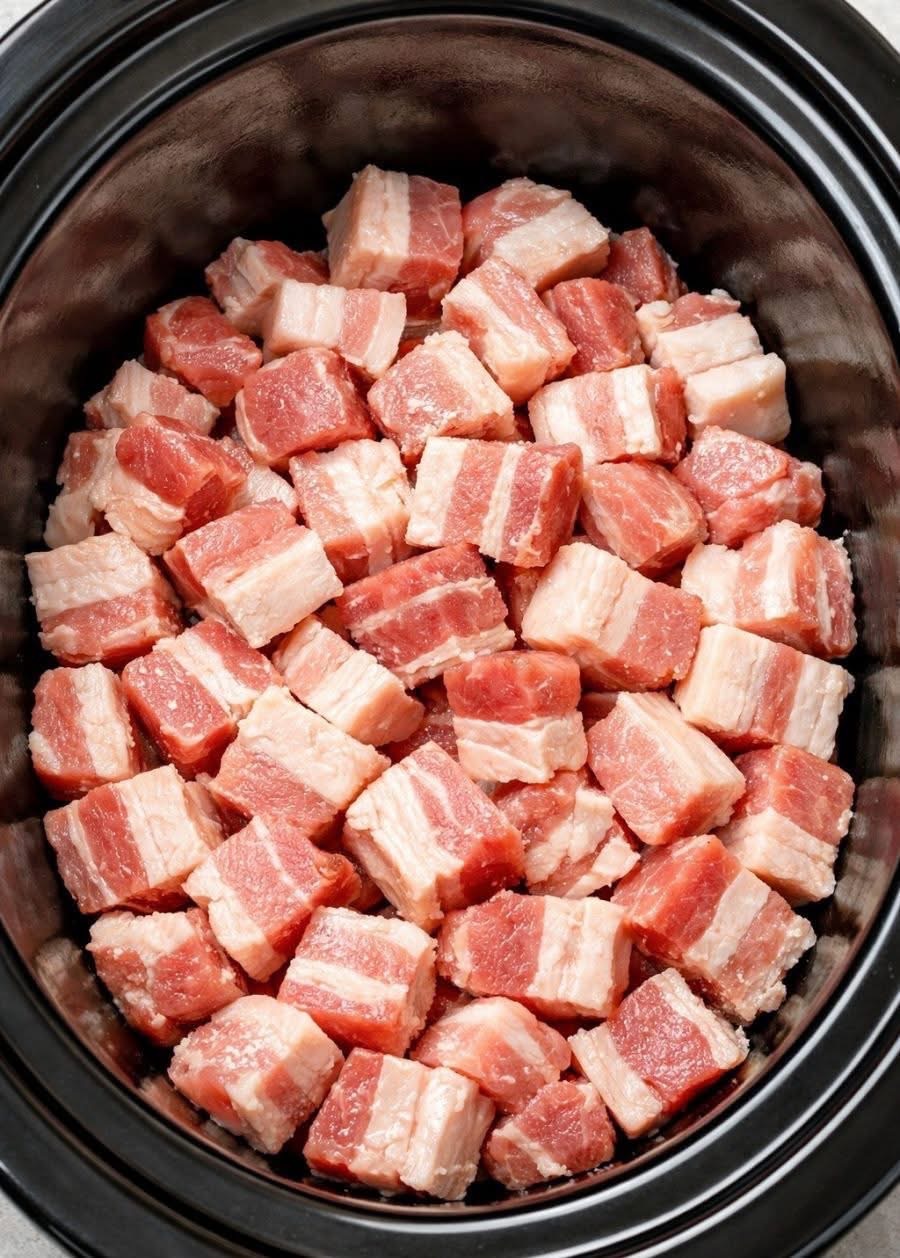
Trim the pork belly of any tough skin if it is still attached. Cut the pork belly into one-inch cubes. Uniform size ensures even cooking. Pat the cubes dry with paper towels.
In a small bowl or directly in the slow cooker, whisk together the sweet chili sauce, soy sauce, honey, minced garlic, grated ginger, and rice vinegar until well combined.
Place the pork belly cubes in the slow cooker. Pour the sauce over the pork and stir to coat every piece evenly.
Cover the slow cooker with the lid. Cook on LOW for four to five hours or on HIGH for two to three hours. The pork is done when it is fork-tender and easily pierced with no resistance. Do not overcook—pork belly can become mushy if cooked too long.
Once tender, use tongs or a slotted spoon to transfer the pork cubes to a baking sheet or large plate. Pour the remaining sauce from the slow cooker into a small saucepan.
Turn the oven to broil (or heat a skillet over medium-high heat). Place the pork cubes under the broiler for three to five minutes, turning once, until the edges are caramelized and sticky. Alternatively, sear the cubes in a hot skillet for two to three minutes per side to create a sticky glaze.
While the pork caramelizes, bring the reserved sauce to a simmer over medium heat. Cook for five to seven minutes until it reduces and thickens into a syrupy glaze. Stir occasionally to prevent burning.
Return the caramelized pork cubes to the thickened sauce and toss to coat. Serve immediately, garnished with sesame seeds and sliced green onions.
Storage
Refrigerate in an airtight container for up to four days. Reheat gently on the stovetop over low heat or in the microwave. The sauce thickens as it cools; add a splash of water when reheating to loosen it. Freeze for up to two months. Thaw overnight in the refrigerator before reheating.
Variations
For a spicy version, add one tablespoon of sriracha or chili garlic paste to the sauce, or sprinkle with red pepper flakes before serving. For a garlic lover’s version, double the garlic to eight cloves. For a bourbon version, add one quarter cup of bourbon or whiskey to the sauce along with the other ingredients. For an orange version, add the zest of one orange and two tablespoons of orange juice. For a peanut version, sprinkle crushed roasted peanuts over the finished dish along with the sesame seeds. For a low-carb version, replace the honey with a keto-friendly sweetener like monk fruit or allulose, and use a sugar-free sweet chili sauce. For an Instant Pot version, cook on HIGH pressure for thirty five minutes with a natural release of fifteen minutes, then reduce the sauce on sauté mode.
Serving Suggestions
Serve over steamed jasmine or white rice, cauliflower rice, or coconut rice. Tuck into soft bao buns with pickled vegetables and cucumber slices. Serve in lettuce wraps with shredded carrots and fresh herbs. Pile onto a baked sweet potato with a drizzle of extra sauce. Serve as an appetizer on toothpicks with a side of extra sweet chili sauce for dipping. Top a bowl of ramen or rice noodles with pork cubes, soft-boiled egg, and green onions. Serve alongside stir-fried bok choy or garlic green beans.
Tips for Best Results
Remove the skin from the pork belly. Pork belly often comes with a tough layer of skin on top. This skin becomes rubbery and unpleasant in the slow cooker. Use a sharp knife to slice it off completely, leaving only the meat and fat layers. Ask your butcher to remove it if you prefer.
Cut pork belly into uniform one-inch cubes. Evenly sized pieces cook at the same rate. Very small cubes may overcook and become dry; very large cubes may not cook through. One inch is the sweet spot.
Pat the pork cubes dry before adding to the slow cooker. Excess moisture dilutes the sauce and prevents proper coating. Dry pork absorbs the glaze much better.
Do not overcook. Pork belly is fatty and forgiving, but too much time in the slow cooker can break it down into mush. For LOW setting, four hours is usually perfect. Check at three and a half hours. The pork should be tender but still hold its cube shape.
Thicken the sauce after cooking. The sauce will be thin straight from the slow cooker because the pork releases moisture. Reducing it on the stovetop concentrates the flavors into a sticky, luxurious glaze. Do not skip this step.
Caramelize the pork cubes for texture. Broiling or searing after slow cooking creates crispy, caramelized edges that contrast beautifully with the tender interior. This step takes five minutes and transforms the dish from good to unforgettable.
Save the rendered fat. Pork belly releases a significant amount of fat as it cooks. Let the cooking liquid settle, then skim off the fat layer. Save it in a jar in the refrigerator. This liquid gold is perfect for roasting potatoes, frying eggs, or sautéing vegetables.
Use a good quality sweet chili sauce. Not all sweet chili sauces are created equal. Look for Mae Ploy, Frank’s, or a similar brand with a balance of sweetness, tang, and mild heat. Avoid thin, watery versions that lack flavor.
Make it ahead for even better flavor. Like many slow cooker dishes, this pork tastes even better the next day. Prepare, cool, and refrigerate overnight. The next day, reheat gently, then broil and glaze as directed.
Serve with something fresh to balance the richness. Pork belly is very rich. A squeeze of lime, a sprinkle of fresh herbs, or a side of pickled vegetables cuts through the fat and brightens every bite. Cilantro, mint, or quick-pickled cucumbers are all excellent choices.