
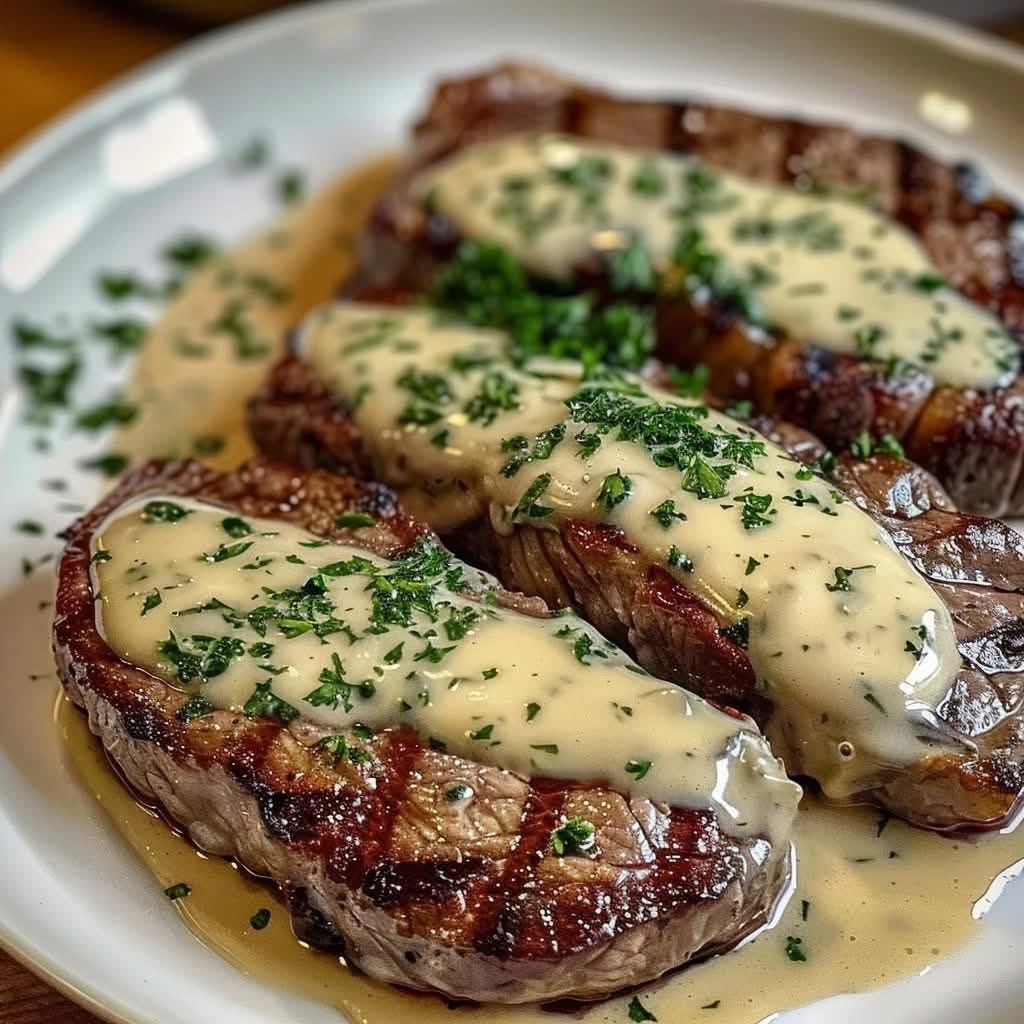
Why Make This Dish? This is the steak dinner of your dreams. You get a perfectly pan-seared, juicy steak with a crispy golden crust, topped with a silky, garlicky cream sauce that feels elegant but comes together in minutes. The sauce is made in the same pan after the steak cooks, so every bit of flavor from those browned bits gets whisked right in. It is restaurant-quality food made in your own kitchen, and it is easier than you think.
Ingredients
For the steak: two boneless ribeye or New York strip steaks (about 8 to 10 ounces each, one inch thick), one tablespoon olive oil, one tablespoon butter, one teaspoon salt, half teaspoon black pepper, and one teaspoon garlic powder (optional).
For the creamy garlic sauce: two tablespoons butter, six cloves garlic (thinly sliced or minced), one cup heavy cream, half cup grated Parmesan cheese, one quarter cup beef broth or chicken broth, one teaspoon Dijon mustard (optional for depth), one quarter teaspoon salt, one eighth teaspoon black pepper, and one tablespoon fresh parsley chopped (for garnish).
Equipment Needed
A large cast-iron skillet or heavy-bottomed pan (stainless steel works well), tongs, a whisk or wooden spoon, a meat thermometer (recommended), a cutting board, and aluminum foil.
Method
Remove the steaks from the refrigerator thirty to sixty minutes before cooking. Pat them completely dry with paper towels. This is essential for a good crust. Season both sides generously with salt, pepper, and garlic powder if using.
Heat a large cast-iron skillet over medium-high heat until very hot. A drop of water should sizzle and evaporate instantly. Add the olive oil and one tablespoon of butter. Swirl to coat the pan.
Carefully place the steaks in the hot skillet. Do not crowd the pan—cook one steak at a time if your pan is small. Press down gently with a spatula to ensure full contact with the pan. Sear undisturbed for three to four minutes until a deep brown crust forms.
Flip the steaks using tongs. Add the second tablespoon of butter to the pan. Sear the second side for three to four minutes for medium-rare. Use a meat thermometer to check doneness: 50°C to 52°C (120°F to 125°F) for rare, 55°C to 57°C (130°F to 135°F) for medium-rare, 60°C to 63°C (140°F to 145°F) for medium. For one-inch thick steaks, medium-rare usually takes about three to four minutes per side.
During the last minute of cooking, tilt the pan slightly so the butter pools. Use a spoon to baste the steaks with the hot butter repeatedly. This adds flavor and helps cook the steaks evenly.
Transfer the steaks to a cutting board. Loosely tent with aluminum foil and let them rest for five to ten minutes. Do not skip this step—resting allows the juices to redistribute so they do not run out when you slice.
While the steaks rest, make the sauce. Pour off any excess oil from the skillet but leave the browned bits stuck to the bottom. Return the pan to medium-low heat. Add the two tablespoons of butter and the sliced garlic. Cook for one to two minutes, stirring constantly, until the garlic is fragrant and very lightly golden. Do not brown or burn the garlic or it will become bitter.
Pour in the beef broth and scrape the bottom of the pan with a whisk or wooden spoon to release all those flavorful browned bits. Let the broth simmer for one to two minutes until reduced by about half.
Reduce the heat to low. Slowly pour in the heavy cream while whisking constantly. Add the Dijon mustard if using. Whisk until the sauce is smooth and slightly thickened, about two to three minutes.
Stir in the grated Parmesan cheese, salt, and pepper. Whisk until the cheese is fully melted and the sauce is creamy. If the sauce is too thick, add a splash more broth or cream. If too thin, simmer for another minute.
Slice the rested steaks against the grain (across the muscle fibers) for the most tender bites. Arrange the slices on plates or a serving platter. Spoon the creamy garlic sauce generously over the top. Garnish with fresh chopped parsley. Serve immediately.
Storage
Store leftover steak and sauce separately in airtight containers in the refrigerator for up to three days. Reheat the steak gently in a skillet over low heat with a splash of broth to prevent drying out. Reheat the sauce on the stovetop over low heat, whisking frequently. Do not microwave the sauce—it may separate. Freezing is not recommended because the cream sauce will separate upon thawing.
Variations
For a mushroom garlic sauce, add one cup of sliced cremini mushrooms to the skillet after removing the steak. Sauté until browned, then add the garlic and proceed with the recipe. For a spicy version, add half a teaspoon of red pepper flakes along with the garlic or a dash of cayenne pepper. For a blue cheese version, crumble two tablespoons of blue cheese into the sauce at the end and stir until just melted. For a herb version, add one teaspoon of fresh thyme or rosemary along with the garlic. For a dairy-free version, substitute full-fat coconut milk for the heavy cream and use a dairy-free Parmesan alternative or nutritional yeast. The flavor will be different but still delicious. For a chicken version, substitute boneless skinless chicken breasts or thighs. Sear for four to five minutes per side, then finish cooking in the sauce. For a shrimp version, sear the shrimp for one to two minutes per side, then remove and make the sauce. Return the shrimp to the sauce just to warm through.
Serving Suggestions
Serve with creamy mashed potatoes to soak up every drop of sauce. Pair with roasted asparagus, garlic green beans, or sautéed spinach. Serve alongside a simple arugula salad with lemon vinaigrette. Top with crispy fried onions or fresh chives. Serve with crusty bread for dipping.
Tips for Best Results
Pat the steaks completely dry. Moisture is the enemy of a good crust. Water on the surface creates steam instead of searing. Use paper towels to blot both sides until the surface feels tacky, not wet.
Bring steaks to room temperature before cooking. A cold steak straight from the refrigerator sears unevenly—the outside burns before the inside cooks. Let the steaks sit on the counter for thirty to sixty minutes before they hit the pan.
Use a hot pan. The pan must be screaming hot before you add the steak. Cast iron holds heat best. If you can hold your hand three inches above the pan for more than two seconds, it is not hot enough.
Do not move the steak while searing. Resist the urge to poke, peek, or slide the steak around. Let it sit undisturbed for three to four minutes. When it is ready, it will release easily from the pan. If it sticks, wait another minute.
Use a meat thermometer. Guessing doneness by time or touch is unreliable because steak thickness and pan temperature vary. A digital instant-read thermometer takes the guesswork out. For medium-rare, pull the steak at 55°C (130°F) for carryover cooking during rest.
Rest the steak before slicing. This is non-negotiable. Resting allows muscle fibers to relax and reabsorb juices. Slicing immediately releases all those juices onto the cutting board, leaving you with dry steak. Five to ten minutes covered loosely with foil is perfect.
Slice against the grain. Look at the direction of the muscle fibers running through the steak. Slice perpendicular to them. This shortens the fibers so each bite is tender, not stringy.
Do not burn the garlic. Garlic cooks fast and burns faster. Burnt garlic tastes bitter and acrid and can ruin the sauce. Cook it over medium-low heat just until fragrant and barely golden—thirty to sixty seconds is usually enough.
Adjust sauce thickness. Cream sauces thicken as they cool. Make the sauce slightly thinner than you want it to be when serving. If it becomes too thick, whisk in a splash of warm broth or cream.
Make extra sauce. Everyone wants more creamy garlic sauce. Double the sauce ingredients while keeping the steak amount the same. You will be glad you did when you are sopping it up with bread or potatoes.